2026 Best Loader Lift Cylinder Types for Global Buyers?
Choosing the right Loader Lift Cylinder in 2026 requires more than comparing bore diameter and purchase price. Global buyers must assess machine weight, lifting cycles, hydraulic pressure, mounting space, climate, and service availability. A cylinder that performs well on a dry construction site may struggle with salt air, freezing temperatures, or heavy dust. Small details matter.
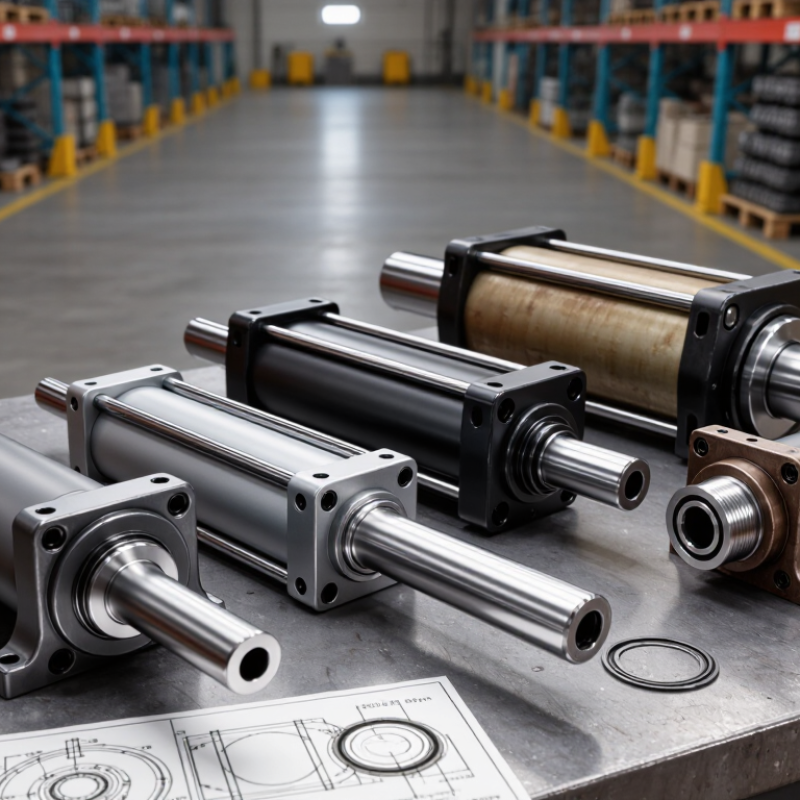
This guide introduces welded, tie-rod, single-acting, double-acting, telescopic, and customized loader lift cylinder options. It explains where each design works best and where it may create maintenance concerns. Welded cylinders often suit demanding loaders because their compact bodies support strong mounting arrangements. Tie-rod designs can simplify inspection and repair, especially when replacement parts are available locally. Telescopic cylinders offer extended reach, but their sealing systems may require closer attention.
Real purchasing experience shows that the cheapest quotation is rarely the lowest operating cost. Buyers should verify rod material, seal quality, corrosion protection, pressure ratings, testing procedures, and warranty terms. Ask for dimensional drawings. Request inspection records. Confirm delivery consistency.
Some recommendations remain uncertain.
Manufacturers may describe similar cylinders differently, making direct comparisons difficult. A supplier’s stated service life also depends on oil cleanliness, operator habits, alignment, and maintenance intervals. This article therefore focuses on practical evaluation rather than confident promises. It helps international distributors, equipment manufacturers, rental companies, and fleet owners compare Loader Lift Cylinder types with clearer technical judgment. The goal is reliable lifting performance, predictable maintenance, and fewer costly surprises across different working environments.
Loader Lift Cylinder Fundamentals: 210–350 Bar Mobile-Hydraulic Duty
Loader lift cylinders convert hydraulic pressure into lifting force, but pressure alone does not determine performance. At 210–350 bar, the bore diameter, rod diameter, stroke, and mechanical leverage all matter. Force equals pressure multiplied by effective piston area. For example, a 100 mm bore at 250 bar can produce roughly 196 kN during extension, before friction and system losses. Retraction force is lower because the rod occupies part of the piston area.
Welded cylinders commonly suit loaders because they offer compact dimensions and strong resistance to vibration. Double-acting designs control both lifting and lowering movement. A hardened, corrosion-resistant rod helps protect the sealing area from dust and moisture. Proper seal materials must match the hydraulic fluid and working temperature.
Cushioning can reduce harsh impact near the stroke ends, especially when the loader moves quickly. Side loading remains a serious concern. It can damage the rod even when pressure stays within limits.
Global buyers should verify the working pressure, proof pressure, stroke length, pin diameter, mounting width, and retracted length. Check these measurements against the machine, not only a catalog drawing. A small mismatch matters. Clean oil is equally important because fine particles can score the rod and shorten seal life.
Field testing should include leakage checks, load holding, smooth movement, and repeated cycling at realistic temperatures. I still double-check pin alignment; a neat specification sheet can hide an awkward installation. Some cylinders look oversized, yet their rod diameter may be insufficient for bending loads.
Single-Acting vs. Double-Acting Cylinders for Loader Lift Functions
Choosing a loader lift cylinder starts with the machine’s lifting cycle, not the lowest purchase price.
Single-acting cylinders use hydraulic pressure in one direction. Gravity, the attachment weight, or an external spring returns the rod. This design can suit simple loaders with predictable lowering loads and limited hydraulic functions. It usually needs fewer hydraulic lines and may simplify maintenance.
Double-acting cylinders use hydraulic pressure for both extension and retraction.
They provide controlled lifting and lowering, even when the attachment is light or the machine operates on uneven ground. That difference matters. In real work, controlled retraction can reduce frame shock and improve operator confidence. For frequent loading, grading, or suspended positioning, double-acting cylinders are often the more practical choice. However, they require additional hydraulic routing, seals, and valve capacity.
I have seen buyers select single-acting units for compact equipment, then struggle with slow or uneven lowering.
The cylinder was not defective. The application was poorly matched. Check rated pressure, bore size, rod diameter, stroke, mounting dimensions, and retracted length. Measure twice. Consider cold climates, dust, salt exposure, and local service skills before ordering. A double-acting cylinder may offer better control, but its seals and hoses need disciplined inspection. Single-acting designs can be reliable, yet they depend heavily on gravity and load balance. That dependency is easy to overlook. Each option deserves a duty-cycle test with the actual attachment, not only a catalogue comparison.
Bore, Rod, and Force Sizing Using F = p × A at 250–350 Bar
2026 Best Loader Lift Cylinder Types for Global Buyers
For loader lift systems, double-acting welded cylinders are common because they control both lifting and lowering. Bore size creates lifting force, while rod diameter affects retraction force and buckling resistance. Use F = p × A, with pressure in pascals and area in square metres.
At 300 bar, a 100 mm bore has an area of about 0.00785 m². Its theoretical push force is approximately 235 kN. At 250 bar, the force falls to about 196 kN. At 350 bar, it reaches roughly 275 kN.
The calculation uses cap-end area.
Retract force uses bore area minus rod area. A 60 mm rod leaves about 0.00502 m² of effective area inside a 100 mm bore. Pressure is not always available at the cylinder. Hoses, valves, oil temperature, and contamination reduce real output. Allow a practical margin for friction and dynamic shocks.
Do not size only from rated loader weight. Bucket position changes the leverage dramatically.
A thicker rod can improve stability, but it also reduces retract force and increases weight.
Bore and stroke must match the loader’s mounting points, lift height, and transport clearance. Check pin loads and side loading in the field. A cylinder may fit perfectly on paper and still wear early. That is the uncomfortable part.
Measure actual pressure and cycle time before final selection. Specification sheets can be precise, yet machine geometry often remains the missing variable.
Cylinder Standards and Ratings: ISO 6020/2 at 160 Bar and ISO 6022 at 250 Bar
2026 Best Loader Lift Cylinder Types for Global Buyers?
For loader lift applications, pressure class matters more than appearance. ISO 6020/2 specifies compact hydraulic cylinders commonly rated at 160 bar. ISO 6022 covers heavier-duty designs, typically rated at 250 bar. These figures describe nominal working pressure, not unlimited operating pressure. A 250-bar cylinder can deliver greater force, but it also demands stronger tube walls, rods, seals, mounts, and hydraulic connections.
A 2025 industrial market assessment forecasts roughly 5% annual growth for hydraulic cylinders through 2030. That expansion reflects rising demand from construction and material-handling equipment. Buyers should still avoid selecting cylinders from market growth figures alone. Check bore diameter, rod diameter, stroke, buckling risk, side-load exposure, and temperature range.
For example, a 100 mm bore at 160 bar produces about 126 kilonewtons of theoretical push force. At 250 bar, the same bore reaches about 196 kilonewtons. Real output falls after efficiency losses.
Field inspections often find mounting misalignment, not pressure, causing early failure. That detail is easy to miss. ISO 6020/2 may suit standard loaders with moderate duty cycles. ISO 6022 is more appropriate for severe loads, higher impact, and demanding cycle frequencies.
Yet, specifying 250 bar everywhere can increase cost without improving service life. Seal compatibility and contamination control remain decisive. The rating label alone is never enough.
Seals, Materials, and Lifecycle Testing for 100,000-Cycle Loader Service
2026 Best Loader Lift Cylinder Types for Global Buyers?
For 100,000-cycle loader service, cylinder selection starts with seal stability, not maximum pressure. A reliable lift cylinder needs seals that resist abrasion, heat, and contaminated hydraulic oil. Polyurethane seals often handle demanding movement well, while backup rings reduce extrusion during pressure spikes. However, one compound cannot suit every climate or hydraulic fluid.
Material choice also affects service life. Hardened, corrosion-resistant rods protect sliding surfaces when loaders work in rain, dust, or coastal air. High-strength steel tubes manage repeated pressure without unnecessary weight. In field inspections, I look for rod scoring, seal dust, and uneven wear after several thousand cycles. Small marks can become major leaks. No test perfectly copies a real jobsite. That limitation deserves attention.
Tips: Request documented 100,000-cycle testing with realistic side loads, temperature changes, and contaminated fluid. Check whether testing records show seal leakage, rod wear, and pressure loss at regular intervals. Ask for dimensional tolerances and material certificates. Keep samples from failed cylinders for comparison. It is easy to trust a clean laboratory result too quickly. A better evaluation combines laboratory data, installation feedback, and maintenance history. Testing should also include cold starts and sudden load changes, because these moments expose weak sealing systems.

 +86-13349293098
 Contact WhatsApp
 Contact Email