How to Choose the Right Bucket Cylinder for Your Excavator
Choosing the right Bucket Cylinder can affect digging force, cycle speed, and the reliability of your excavator’s bucket linkage. The correct fit depends on more than the machine’s make and model. Bore size, rod diameter, stroke length, pin dimensions, and mounting style must all match the excavator’s specifications. Fit matters. A cylinder that looks close may still bind, leak, or place extra strain on pins and hydraulic components.
Start with the machine model and serial number, then check the manufacturer’s parts information or confirm measurements with a qualified equipment supplier. Compare the cylinder’s rated pressure and connection details as carefully as its length. On a working machine, even a small mismatch can show up as a slow bucket curl, uneven movement, or a hose that rubs against the frame. Small details count. Consider the material and conditions too: abrasive soil, frequent heavy loads, and long shifts can increase wear on seals and rod surfaces. A clean, undamaged rod is a useful sign, but it does not prove the cylinder is internally sound. I have seen measurements taken in a hurry create more confusion than they solve. This guide explains the key checks, common fitment mistakes, and practical questions to ask before buying, so you can make a more informed choice without relying on appearance alone.
Identify the Bucket Cylinder’s Function, Excavator Model, and OEM Part Number
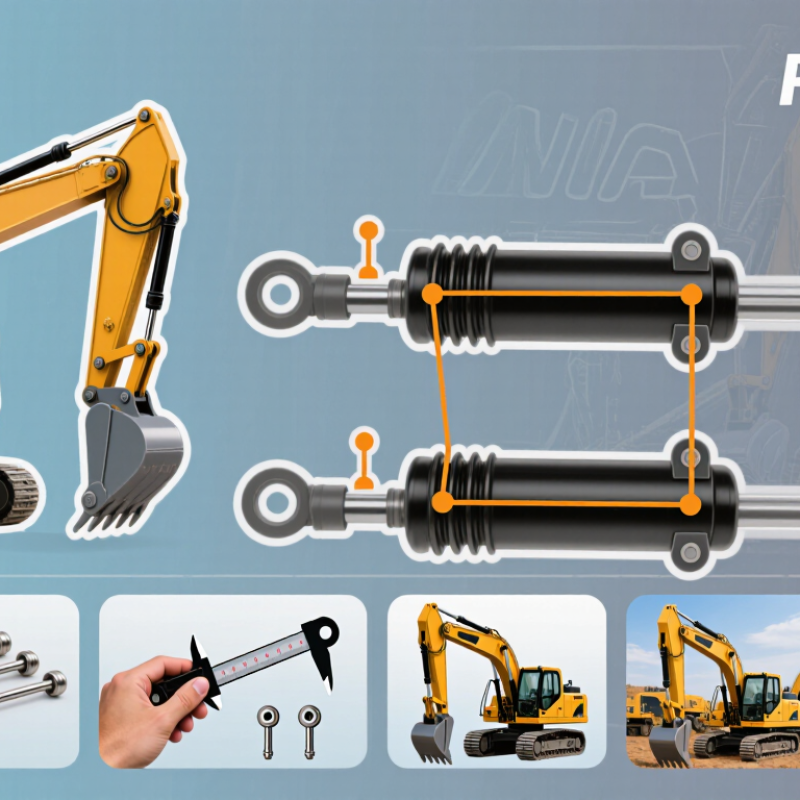
A bucket cylinder controls the bucket’s curl and dump movement. It extends and retracts under hydraulic pressure, transferring force through the linkage. Before choosing a replacement, confirm that the cylinder is for the bucket, not the boom or arm. Record the excavator’s exact model, serial number, and attachment configuration. Small differences matter. Machines with similar names may use different cylinders after a production update or linkage change.
Compare the OEM part number in the machine’s parts manual or with a qualified parts supplier. Then check key measurements: pin diameter, pin-to-pin length, stroke, port position, and mounting width. A cylinder that looks nearly identical can still have different geometry. A clean visual match is reassuring, but it is not proof. If the listed part number has been superseded, confirm that the replacement fits your specific serial-number range before ordering.
Tips: Photograph the cylinder and its mounting points before removal. Measure between pin centers with the cylinder fully retracted, if safe and practical. Check hose-port direction and rod condition, too. Write down your measurements; memory is less reliable than it seems. If a dimension is uncertain, pause and verify it rather than guessing.
Match Bore, Rod Diameter, and Stroke to OEM Specifications
How to Choose the Right Bucket Cylinder for Your Excavator
Match the replacement cylinder to the excavator’s OEM bore, rod diameter, and stroke—not just its overall length. Bore controls extension force; rod diameter affects retraction force and resistance to bending. Stroke determines how far the bucket linkage can travel. A close visual match can still stop the bucket short or strain its pins. Small mismatch. Big trouble.
Use the OEM service manual or cylinder drawing as the primary reference. ISO 6020-2:2018 defines mounting dimensions for a standardized class of hydraulic cylinders, but it does not replace machine-specific specifications. Check pin-center dimensions, port location, and closed length alongside the three main measurements. For example, at 20 MPa, an 80 mm bore produces about 100.5 kN of ideal extension force. With a 50 mm rod, ideal retraction force is about 61.3 kN. These figures use pressure multiplied by piston or annular area; actual force is lower because of losses. Measure the old cylinder only as a cross-check, since wear or a previous repair may have changed it. It’s easy to overlook that. Before installation, compare the part drawing and confirm the machine’s hydraulic pressure and linkage clearance.
How to Choose the Right Bucket Cylinder for Your Excavator
Compare bore, rod diameter, and stroke with the machine’s OEM specifications. The chart shows each example cylinder’s dimensions as a percentage of an illustrative reference: 80 mm bore, 45 mm rod, and 500 mm stroke.
Example dimensions are for comparison only, not OEM specifications. Confirm the required bore, rod diameter, stroke, pin dimensions, and mounting details using the excavator’s serial-number-specific documentation before ordering.
Verify System Pressure: Excavators Commonly Operate at 3,000–5,000 psi
When choosing a bucket cylinder, check the excavator’s actual hydraulic pressure rather than relying on a general estimate. Many machines operate around 3,000–5,000 psi, but model, attachment, and relief-valve settings can change the figure. Check the service manual or hydraulic specifications. Guessing can be costly.
The replacement cylinder must be rated for the machine’s maximum working pressure, including brief pressure spikes. Compare its bore, rod diameter, stroke, and mounting dimensions with the original cylinder. A cylinder that fits the pins may still deliver the wrong force or travel. Measure carefully.
If readings are available, use a suitable pressure gauge at the specified test point and follow the machine’s service procedure. Never loosen a hydraulic fitting to “check” pressure; trapped oil can cause serious injury. I have seen pressure assumptions linger after repairs, even when components changed. It is worth rechecking. Also confirm hose and seal ratings, since they must suit the system too. If specifications conflict, pause and ask a qualified hydraulic technician to verify the setup before installation.
Check Mounting Dimensions Against ISO 6020-2’s 16 MPa Series
When choosing a bucket cylinder, compare its mounting dimensions with the ISO 6020-2 16 MPa series—not just its bore and stroke. Check the pin diameter, pin-to-pin length when retracted, mounting width, and rod-end connection against the excavator’s existing cylinder. A few millimeters can matter. Misaligned pins may make installation difficult and place unwanted side load on the rod and seals.
Use the machine’s service information and the cylinder’s dimensional drawing together. Confirm the stroke, port location, and clearance around hoses through the full bucket movement. ISO 6020-2 provides a dimensional framework for this series, but it does not prove that every cylinder will suit every excavator. Verify the pressure requirements and load conditions too.
A neat match on paper can still miss a bracket offset. It happens. If a measurement is uncertain, measure the removed cylinder and mounting points directly, then compare the results before ordering. Keep a note of any assumptions; they are easy to forget later.
Confirm Pin Fit, Seal Compatibility, and Duty-Cycle Requirements
A bucket cylinder must match the excavator’s geometry, not just look close on the workbench. Measure pin diameter, pin-to-pin distance, and cylinder length at both ends of its stroke. Check the mounting width and bushing condition, too. A few millimeters can create side load, which may damage pins or seals over time. Measure twice.
Seal compatibility depends on more than cylinder size. Confirm the seal material suits the machine’s hydraulic fluid and operating temperature. Match the rod diameter, bore, and rated pressure to the excavator’s specifications. Inspect the old seals for cuts, flattened edges, or swelling; these clues can point to contamination or heat. A worn rod can ruin new seals, even when the replacement kit fits.
Consider how the machine actually works. Repeated digging in hard ground creates a different duty cycle from occasional landscaping. Frequent cycles and heavy loads build heat and can accelerate wear, so verify the cylinder’s pressure and service ratings against the machine manual. Check hose routing through the bucket’s full range of motion. There should be no sharp bends or rubbing. Field measurements are useful, but they can be imperfect; compare them with service data before ordering.
 +86-13349293098
 Contact WhatsApp
 Contact Email