What is a Hydro Cylinder and How Does It Work?
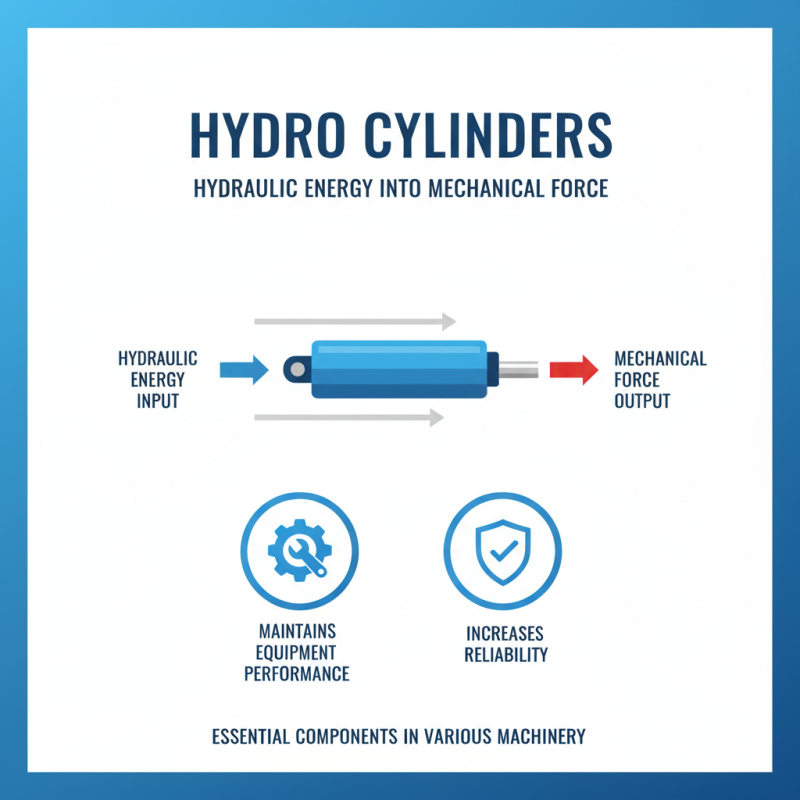
Hydro cylinders are essential components in various hydraulic systems. They convert hydraulic energy into mechanical energy. Using pressurized fluid, they create powerful linear motions. These devices play a crucial role in many industries, from automotive to construction.
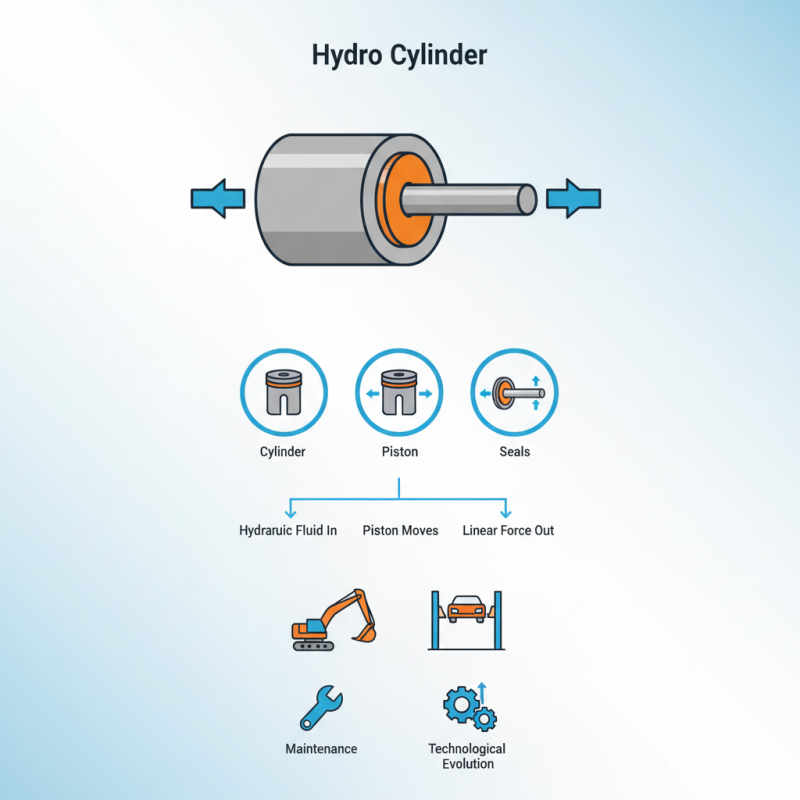
The design of a hydro cylinder seems simple, but its function is vital. It consists of a cylinder, piston, and seals. When hydraulic fluid enters, the piston moves, generating force. This process appears seamless, but even small errors can lead to problems. Issues like leaks or wear can undermine performance.
Understanding hydro cylinders allows us to appreciate their significance. They offer strength and precision, yet they require careful maintenance. As technology evolves, so do their applications. Future innovations may improve efficiency, but the basic principles remain. Reflecting on their simplicity can be enlightening.
What is a Hydro Cylinder?
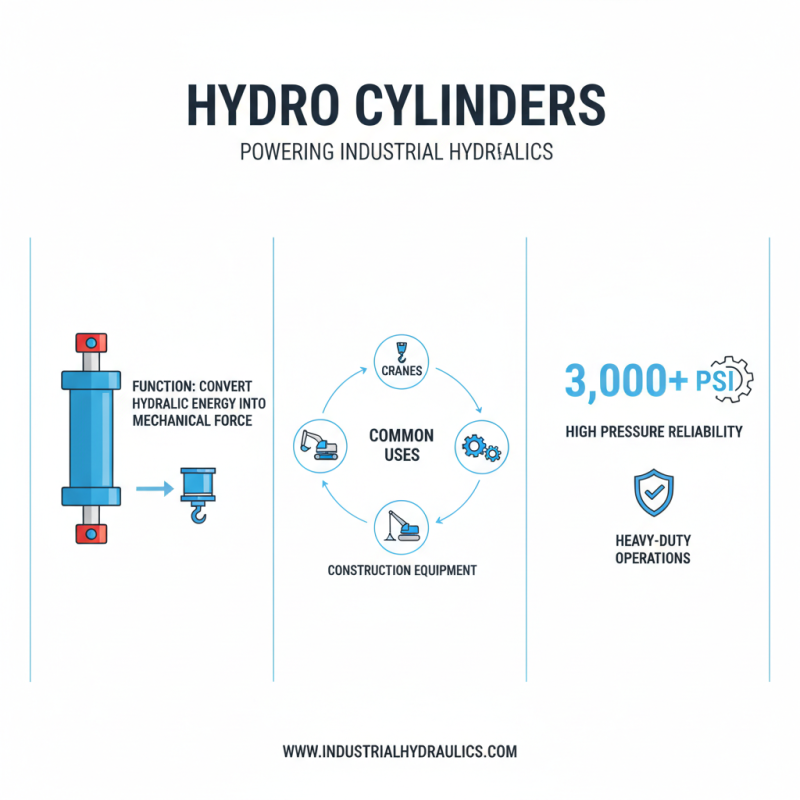
Hydro cylinders, commonly used in various industrial applications, serve as vital components in hydraulic systems. These devices convert hydraulic energy into mechanical force. They are crucial in machines, cranes, and construction equipment. Hydro cylinders are designed to withstand high pressure, often exceeding 3,000 PSI. This makes them reliable in heavy-duty operations.
The main function of a hydro cylinder is to provide linear motion. A piston moves inside a cylinder when hydraulic fluid is pumped in. This movement generates force that can lift or push heavy loads. However, not all cylinders perform efficiently. Regular maintenance is essential to prevent leaks and wear. Neglecting this can lead to costly downtime.
Tip: Always check for signs of wear on seals. Small leaks can escalate quickly.
Proper selection is vital. Hydro cylinders come in various sizes and stroke lengths. Understanding your specific application helps in choosing the right cylindrical type. For instance, some cylinders are better suited for high-speed applications. Others excel in force generation.
Tip: Consult technical datasheets before purchasing to ensure compatibility.
Key Components of a Hydro Cylinder
Hydro cylinders, also known as hydraulic cylinders, are essential components in various machinery. They convert hydraulic energy into mechanical force. Understanding these components helps in maintaining equipment performance and reliability.
Key components of a hydro cylinder include the cylinder barrel, piston, rod, seals, and ports. The barrel is crucial; it houses the piston and fluid. It must withstand high pressure. The piston divides the cylinder into two chambers, allowing the movement of the rod. The rod transmits force to the machinery or equipment.
Proper maintenance is critical. Tips: Regularly inspect seals for wear and tear. A damaged seal can lead to fluid leaks. Keep the cylinder clean to prevent contamination. Dust and debris can cause failure. According to industry reports, over 30% of hydraulic system failures are due to poor maintenance practices.
With proper care, hydro cylinders can operate efficiently. Monitor performance metrics. Look for unusual noises or movements. These could indicate underlying issues that need attention. Remember, neglecting these components can lead to significant downtime and repair costs.
The Principles of Hydraulic Force in Hydro Cylinders
Hydro cylinders, or hydraulic cylinders, use hydraulic force to perform mechanical work. These devices function on a simple principle: pressurized fluid is used to create movement. This fluid enters the cylinder, pushing a piston. The force generated depends on the fluid’s pressure and the cylinder’s area.
In practical applications, these systems can lift heavy loads. For example, in construction, they raise cranes and diggers. However, they are not without challenges. Small leaks can lead to significant energy losses. Operators can sometimes overlook maintenance, causing inefficiencies. Moreover, if the pressure is too high, it can damage the entire system.
Understanding hydraulic principles is essential for effective use. A clear grasp of fluid dynamics aids in troubleshooting common issues. Observing how pressure changes with different loads can also reveal useful insights. It encourages a proactive approach to maintenance, ultimately prolonging the lifespan of the equipment.
What is a Hydro Cylinder and How Does It Work? - The Principles of Hydraulic Force in Hydro Cylinders
| Attribute |
Description |
Functionality |
| Hydraulic Fluid |
A liquid used to transfer power in hydraulic systems. |
Transmits force through the cylinder to create movement. |
| Piston |
A movable component that converts hydraulic pressure into mechanical force. |
Drives the motion required for tasks, such as lifting or pushing. |
| Cylinder Barrel |
The outer casing that houses the piston and hydraulic fluid. |
Provides structure and contains hydraulic fluid under pressure. |
| Seal |
A component that prevents hydraulic fluid from leaking out of the cylinder. |
Ensures efficient operation by maintaining pressure within the system. |
| Pressure Relief Valve |
A safety device that prevents excessive pressure build-up within the system. |
Protects equipment from damage due to overpressure. |
Common Applications of Hydro Cylinders
Hydro cylinders are vital in many industries. They convert hydraulic energy into mechanical force. Common applications include construction machinery, automotive systems, and marine equipment. These cylinders provide powerful lifting and pushing capabilities.
In construction, hydro cylinders power heavy equipment like excavators and bulldozers. They lift massive loads with ease. In the automotive sector, they assist in controlling braking systems and suspension. They offer precise adjustments for better vehicle handling. Marine applications include powering boat lifts and stabilizers, ensuring safety and efficiency.
Tips: Regular maintenance is crucial. Check for leaks and ensure seals are intact. Proper maintenance extends the life of your hydro cylinders. Be aware of load limits. Overloading can damage your equipment and lead to serious accidents. Understanding your system helps prevent mistakes.
Maintenance and Troubleshooting of Hydro Cylinders
Hydro cylinders, or hydraulic cylinders, require regular maintenance to ensure efficiency. According to industry reports, nearly 30% of hydraulic system failures stem from inadequate maintenance. This can lead to costly downtimes and repairs. Operators should inspect the cylinders frequently for any signs of leakage or wear. A small leak can escalate quickly, causing significant damage.
Keeping lubrication levels appropriate is critical. The right oil viscosity ensures smooth movement. Furthermore, professionals recommend cleaning the hydraulic system to prevent contamination. Research indicates that over 50% of hydraulic failures involve internal contaminants. Regular fluid changes can minimize this risk.
Understanding common issues helps address problems early. For instance, if a cylinder is slow to act, this often points to internal wear. Monitoring performance can save time and money. Ignoring these symptoms, however, may lead to complete system failure. Each cylinder should have a dedicated checklist for effective troubleshooting.
Hydraulic Cylinder Performance Metrics
This bar chart illustrates key performance metrics for hydraulic cylinders, including load capacity, stroke length, pressure, cycle time, and operating temperature. These metrics are essential for understanding how hydraulic cylinders function and their maintenance needs.

 +86-13349293098
 Contact WhatsApp
 Contact Email