What is a Slewing Bearing and How Does It Work?
Slewing bearings play a crucial role in many machinery applications. They are large, ring-shaped bearings used to support rotating systems. These components enable smooth and efficient movement. Understanding how they work can enhance machinery performance.
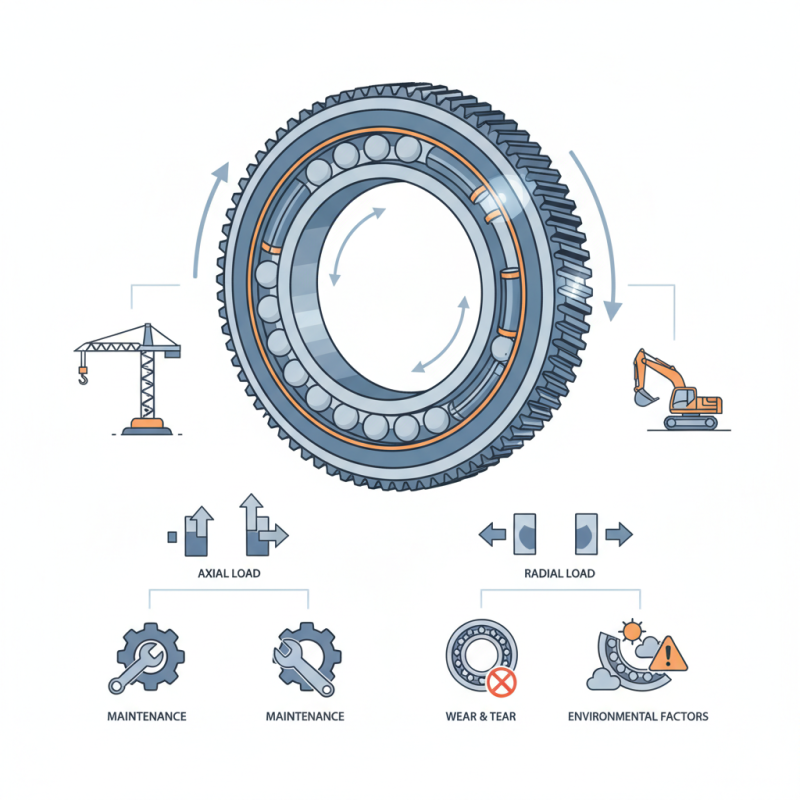
A slewing bearing typically consists of an outer ring, inner ring, and rolling elements. The design allows for high loads and moment capacities. Many machines, like cranes and excavators, rely on slewing bearings for their operations. They can support both axial and radial loads. Over time, wear and tear can affect their efficiency. Regular maintenance is vital to prevent failures.
While slewing bearings are essential, they are not without challenges. Their installation requires precision. Misalignment can lead to premature wear. Users should also consider environmental factors affecting performance. Overall, understanding slewing bearings is key for machinery longevity and productivity.
What is a Slewing Bearing?
A slewing bearing is a crucial component in many large machines. Its design allows for rotation between two parts. These parts can be a platform and a base structure. Slewing bearings can handle axial, radial, and moment loads. This versatility makes them common in cranes, excavators, and wind turbines.
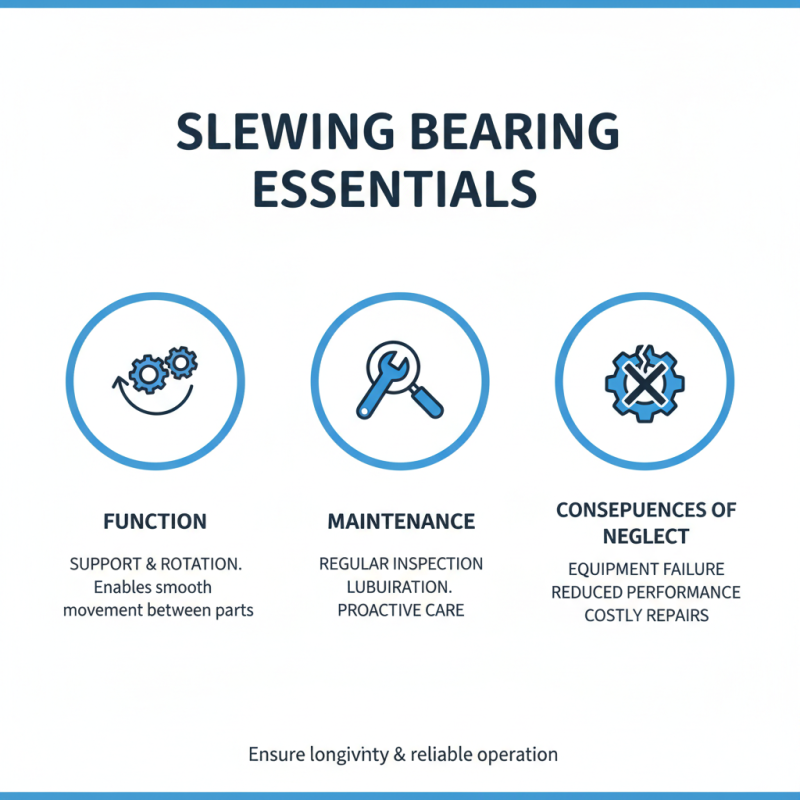
The inner workings of a slewing bearing are interesting. It consists of an outer ring, an inner ring, and rolling elements in between. These components work together to enable smooth rotation. However, the assembly can sometimes be tricky. Misalignment can cause premature wear. Regular maintenance is essential to avoid costly failures. Even minor issues, like dirt buildup, can affect performance. This highlights the importance of attention to detail.
Many engineers appreciate the effectiveness of slewing bearings. Yet, they also recognize the challenges involved. Selecting the right size and type is not always straightforward. Conditions like temperature and load factors must be considered. Mistakes at this stage can lead to serious operational problems. Understanding these components requires experience and careful thought.
Key Components of Slewing Bearings
Slewing bearings are essential components in various heavy machinery. They allow rotational movement between two parts, often found in cranes, excavators, and wind turbines. Understanding their key components helps in optimizing their function and longevity.
The main parts of a slewing bearing include the outer ring, inner ring, rolling elements, and the cage. The outer ring is fixed, while the inner ring rotates. Rolling elements such as balls or rollers provide the necessary smooth movement. A recent industry report indicates that a properly designed slewing bearing can support a load capacity of up to several hundred tons. Yet, wear and tear can compromise performance over time.
Another critical component is the lubrication system. Proper lubrication minimizes friction but is often neglected. Statistics show that inadequate lubrication can lead to a 50% reduction in bearing life. Regular maintenance, including inspections, is vital. Many operators overlook these practices, leading to costly downtime. Careful attention to these details can enhance efficiency, but not all operators prioritize this.
Slewing Bearings: Key Components and Their Distribution
Operating Principles of Slewing Bearings
Slewing bearings are essential components in various machinery. They enable rotational movement between parts, particularly in cranes and excavators. Understanding their operating principles is crucial for efficient use.
Slewing bearings consist of an outer ring, inner ring, and rolling elements. The design allows them to handle axial, radial, and moment loads simultaneously. This capability is significant. According to industry reports, slewing bearings can reduce friction by up to 30%, improving operational efficiency. Their versatile functionality makes them suitable for applications ranging from wind turbines to radar systems.
Tip: Regularly inspect your slewing bearings. Look for wear and tear signs. This practice can prevent unexpected failures.
Another point to consider is lubrication. Maintaining proper lubrication is vital. Insufficient lubrication can lead to overheating and damage. These issues can arise, especially in high-load applications. A well-lubricated bearing can last significantly longer, up to 50% more than poorly maintained ones.
Tip: Schedule lubrication checks as part of your maintenance routine. Staying proactive saves you headaches later.
What is a Slewing Bearing and How Does It Work? - Operating Principles of Slewing Bearings
| Dimension |
Description |
Material |
Application |
| 200 mm |
Compact design for small machinery |
Steel |
Construction equipment |
| 500 mm |
Heavy-duty applications |
Alloy Steel |
Crane systems |
| 1000 mm |
High load capacity |
Chrome-Molybdenum Steel |
Wind turbines |
| 1500 mm |
Large industrial machines |
Stainless Steel |
Mining equipment |
| 2000 mm |
Extreme durability and strength |
Carbon Fiber reinforced Steel |
Marine applications |
Applications of Slewing Bearings
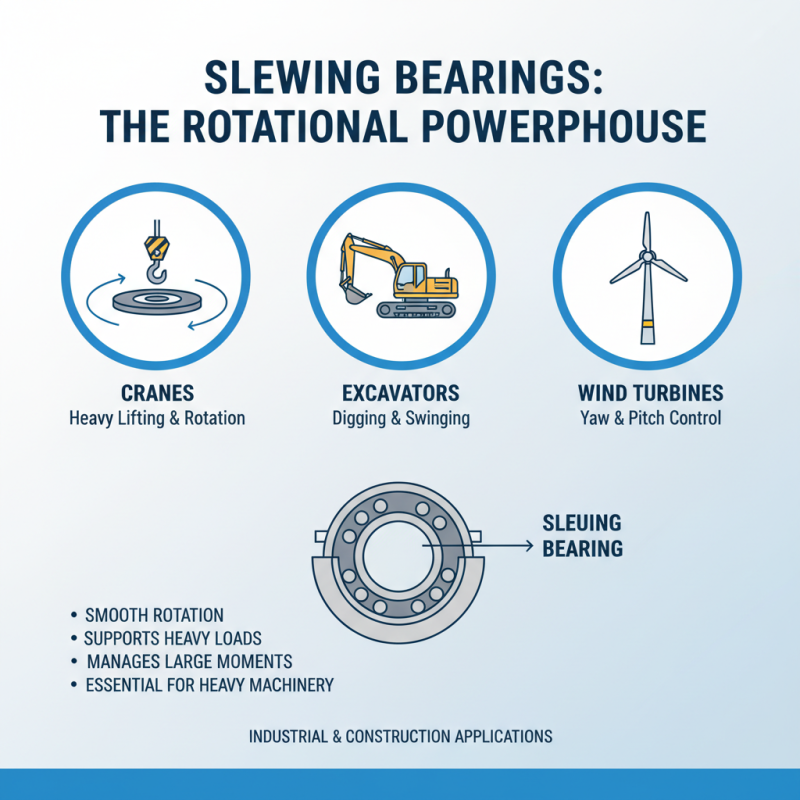
Slewing bearings play a crucial role in various heavy machinery applications. These components are essential in cranes, excavators, and wind turbines. They allow for smooth rotation and support heavy loads. Their design enables them to manage large moments of force effectively. This is particularly important in construction and industrial settings.
In the renewable energy sector, slewing bearings are vital. Wind turbines rely on them for rotating blades to capture wind efficiently. This contributes to energy generation. Similarly, in marine applications, slewing bearings support the rotation of radar and communication systems. They ensure stability, making operations safer and more reliable.
However, the performance of slewing bearings can be affected by environmental factors. Excessive dust or moisture can lead to wear and tear. Maintenance is often overlooked, which can lead to failures. Understanding these challenges is essential for maximizing their functionality. Proper care extends their life, but it requires regular inspection and attention. These details matter in maintaining efficiency across various applications.

 +86-13349293098
 Contact WhatsApp
 Contact Email