Leave Your Message

What Is a Slewing Bearing Used For?

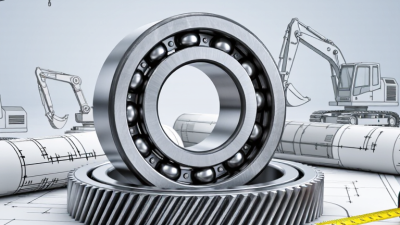
A Slewing Bearing allows a machine’s upper structure to rotate while supporting combined axial, radial, and tilting loads. It is more than a simple turntable. Inside the ring, rolling elements move along precisely machined raceways, while gear teeth may drive rotation directly. The result is controlled movement under heavy loads, often in limited space.

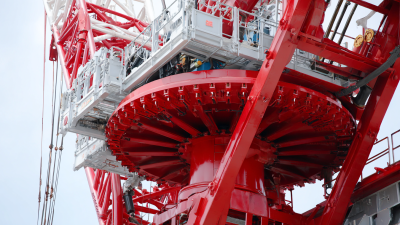
You can find slewing bearings in excavators, cranes, wind turbines, and solar tracking systems. On an excavator, the bearing lets the cab and boom turn over the stationary undercarriage. On a wind turbine, it supports yaw movement as the nacelle turns toward changing winds. Industry growth makes these applications increasingly relevant: the Global Wind Energy Council’s Global Wind Report 2024 records 117 gigawatts of new wind capacity installed worldwide in 2023. That figure signals a large equipment base, though it does not measure bearing demand directly.

Details matter. A bearing chosen for a crane may face different load combinations, duty cycles, and environmental conditions than one used in a turbine. Engineers therefore check load ratings, mounting-bolt patterns, lubrication needs, sealing, and expected service life against the machine’s actual operating conditions. The bearing is not the whole system. Gear backlash, mounting-surface flatness, and maintenance also affect performance. A catalogue rating alone can look reassuring, but it cannot replace application-specific calculations. That caveat is easy to overlook.
What Is a Slewing Bearing Used For?

Core Functions of a Slewing Bearing

What Is a Slewing Bearing Used For?
Core Functions of a Slewing Bearing

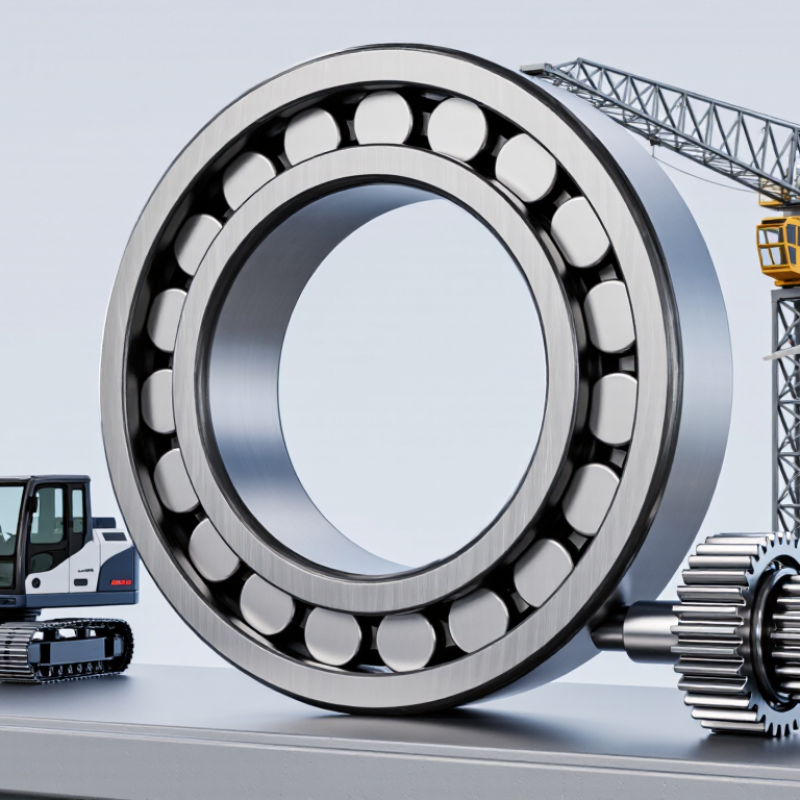
A slewing bearing supports controlled rotation between two large machine sections. It also transfers loads between them. In a crane, for example, it lets the upper structure turn while carrying the boom, cab, and lifted load. The bearing may handle axial force, radial force, and tilting moments at the same time. That is the job.

Its raceways and rolling elements distribute these forces around a wide diameter. This helps machinery rotate smoothly without a separate central shaft. Some slewing bearings include gear teeth to work with a drive pinion; others do not. The bearing itself supports and guides rotation, while the drive provides turning force. Those functions are related, but not interchangeable.

The design affects accuracy, load capacity, and service life. A loose fit or uneven mounting surface can concentrate stress, even when the bearing is correctly sized. Dust, water, and poor lubrication can also accelerate wear. These details are easy to underestimate. Regular checks for noise, looseness, and lubricant condition can reveal trouble early, but inspection intervals should reflect the machine’s workload and operating environment.

How It Supports Rotation and Combined Loads

What Is a Slewing Bearing Used For?
How It Supports Rotation and Combined Loads

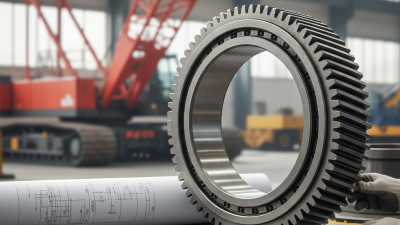
A slewing bearing lets a large machine turn slowly while keeping its structure supported. In an excavator, it sits between the undercarriage and upper body. As the cab swings, the bearing carries vertical weight, sideways forces, and an overturning moment. These loads act together, not one at a time. That matters. The raceways and rolling elements spread contact forces around a wide diameter, while seals help keep grit and moisture away. Some designs include gear teeth for powered rotation; the bearing itself supports the load rather than supplying the drive.

Wind turbines offer a clear example. NREL’s 2009 5-MW reference-turbine report specifies a 126-meter rotor, giving engineers a documented scale for studying forces transmitted through the rotating assembly. At the tower top, a yaw bearing allows the nacelle to turn toward the wind while carrying structural loads. ISO 281:2007 defines basic rating life as one million revolutions at 90% reliability for a bearing population under stated conditions. That figure is a useful reference, not a direct life prediction for every slewing bearing. Large bearings often move through short or oscillating angles, so checking lubrication, mounting stiffness, shock loads, and operating cycles matters. Real installations can be less tidy than a calculation suggests.

What a slewing bearing does: It lets a structure rotate while transferring axial force, radial force, and overturning moment between the rotating and fixed parts. The bars show an illustrative load case, not a bearing rating; actual loads depend on the application and must be checked against the selected bearing’s specifications.

Equipment That Commonly Uses Slewing Bearings

Slewing bearings let heavy equipment rotate a load while carrying axial, radial, and tilting forces. On an excavator, the large ring sits between the undercarriage and upper carriage. It turns the cab, boom, and loaded bucket without moving the tracks. Mobile cranes use similar bearings to swing a boom over a worksite. In ports, ship-to-shore cranes rely on controlled rotation to position containers above narrow landing areas. The bearing is easy to overlook. Until it develops play.

Wind turbines use slewing bearings in yaw systems, which turn the nacelle toward the wind; some designs also use them for blade pitch. The Global Wind Energy Council’s Global Wind Report 2024 records 117 gigawatts of new wind capacity installed worldwide in 2023. That figure describes industry growth, not bearing sales, but it shows the scale of machinery that depends on precise rotation. Aerial work platforms and some radar or observation systems also use slewing rings when they need compact, load-bearing rotation. Selection depends on load, speed, mounting stiffness, and exposure to dust or moisture. Field checks matter too: uneven wear or loose fasteners can escape notice during routine operation. I’d inspect the seal and bolt pattern, not just the turning motion.

Design Features for Different Operating Conditions

A slewing bearing supports rotation while carrying axial, radial, and tilting loads. It is used in cranes, excavators, wind turbines, and other equipment with large rotating structures. Design choices depend on the machine’s load pattern, speed, space, and surroundings. A bearing exposed to shock loads may need robust raceways and carefully selected internal clearances. For smoother, steady rotation, rolling elements and raceway geometry are chosen to limit friction and uneven contact.

Mounting matters. A stiff, flat support helps distribute loads across the bearing instead of concentrating them at a few bolt holes. Gear teeth may be internal or external, depending on the drive layout and available clearance. Seals help keep out dust, water, and abrasive particles; the right type depends on exposure and maintenance access. Grease paths should reach the contact zones, not just the easiest fitting to reach. Small details matter.

Temperature changes, vibration, and repeated starts can alter performance over time. Regular checks for unusual noise, loosened fasteners, seal damage, and lubricant condition provide useful clues, though they cannot replace the maker’s load calculations or inspection guidance. A detail that is often overlooked is the supporting structure itself. Not always. Even a well-selected bearing can wear unevenly if the mounting surface flexes or is poorly aligned.

What Is a Slewing Bearing Used For? — Design Features for Different Operating Conditions

Application or Operating Condition Typical Loads and Motion Common Bearing Design Features Why These Features Matter Selection Considerations
Excavators and mobile construction equipment Combined axial, radial, and overturning-moment loads; intermittent rotation, shock, and vibration. Large-diameter slewing ring, raceways sized for combined loads, robust sealing, and often an external or internal gear. The bearing supports the upper structure while allowing it to rotate relative to the undercarriage. Seals help limit the entry of dirt and moisture. Consider peak loads, shock factors, mounting-bolt pattern, gear-mesh requirements, lubrication access, and contamination exposure.
Cranes and lifting equipment High overturning moments and changing axial loads as the boom and lifted load move; rotation may be slow and intermittent. Four-point-contact ball or roller-type arrangements; geared or gearless configurations; carefully specified mounting surfaces and bolts. The bearing transfers forces between the rotating superstructure and its support while enabling controlled rotation. Selection must account for the applicable crane design standard, load combinations, duty cycle, support stiffness, and inspection requirements.
Wind turbines Large, variable loads from wind, blade motion, and operating or parked conditions; typically slow rotation or oscillation. Large-diameter bearing assemblies with engineered raceways, seals, lubrication provisions, and corrosion protection suited to the installation. Slewing bearings are used in yaw systems to turn the nacelle toward the wind and in some turbine designs to adjust blade pitch. Evaluate fatigue life, oscillating duty, environmental exposure, lubrication intervals, sealing, and system-level load cases.
Solar tracking systems Low-speed, frequent positioning with wind and weather loads; load levels vary with tracker size and configuration. Compact slewing ring or geared slewing drive, with seals and lubrication selected for outdoor service. The rotary support enables panels or arrays to change orientation while carrying structural loads. Check wind-load calculations, backlash needs, corrosion resistance, operating temperature, and the required tracking accuracy.
Industrial manipulators and rotary tables Repeated starts and stops, positioning loads, and combined forces; accuracy and smooth motion may be important. Crossed-roller or precision ball-bearing designs may be used where stiffness, compactness, or low rotational resistance is required. Rolling elements arranged to carry loads in multiple directions can support compact rotary joints and positioning equipment. Consider runout, stiffness, speed, acceleration, mounting accuracy, preload, and the effect of gear or drive-system backlash.
Port, shipboard, and marine equipment Combined structural loads with exposure to salt spray, humidity, and, in some installations, vessel motion. Sealed bearing arrangements, suitable protective coatings or materials, and lubrication provisions appropriate to the environment. The bearing provides a large rotary interface for equipment such as cranes, handling systems, or deck machinery. Specify the actual marine environment, corrosion-protection system, sealing arrangement, drainage, maintenance access, and load spectrum.
High-moment or heavy-duty rotary structures High axial and radial loads combined with substantial overturning moments, often at low speeds. Three-row roller designs can separate axial, radial, and moment load paths; alternative designs depend on the required envelope and capacity. Separating load paths can provide high load capacity within a large-diameter rotary support, subject to the specific bearing geometry. Compare capacity, stiffness, dimensions, weight, lubrication, mounting structure, and total cost for the complete assembly.
General slewing applications Slow rotation, intermittent motion, or oscillation under a combination of loads. Single-row four-point-contact ball, double-row ball, crossed-roller, or multi-row roller arrangements; with or without an integrated gear. Slewing bearings combine a large-diameter rolling bearing with a compact rotary interface and can carry axial, radial, and moment loads. Final selection depends on load magnitude and direction, speed, duty cycle, accuracy, environment, mounting stiffness, and maintenance plan.

Factors Affecting Selection and Service Life

What Is a Slewing Bearing Used For?

A slewing bearing supports a rotating structure while carrying axial, radial, and tilting loads. It is commonly used in excavators, cranes, and turntables. Choosing one involves more than matching its diameter to the machine. Engineers need to estimate the loads, rotation speed, operating cycle, and possible shock forces. A grab bucket stopping suddenly can create loads that a smooth rotation calculation misses.

Tips: Check the mounting surface for flatness and stiffness. Uneven support can concentrate stress and shorten bearing life. Allow for contamination, temperature changes, and limited maintenance access when comparing seal and lubrication options.

Service life depends on installation as well as bearing size. Correct bolt tightening, suitable lubrication, and intact seals help reduce wear. Dust, water, and neglected grease can damage raceways over time. Inspect for unusual noise, rising rotation torque, looseness, or visible lubricant leakage. Follow the bearing maker’s load ratings and maintenance guidance for the actual duty cycle. Still, field conditions rarely match a perfect calculation; record operating changes and review the selection if loads or rotation patterns shift.