Top 5 Tips for Choosing the Right Slewing Ring for Your Project?
Choosing the right slewing ring for your project is crucial. An industry expert, Dr. Emily Hart, once stated, "Selecting a slewing ring can define your project’s success." Her insight underscores the importance of informed decision-making in this specialized field.
When it comes to slewing rings, various factors influence their effectiveness. The size, load capacity, and material are pivotal in ensuring optimal performance. It’s easy to overlook these details, but doing so can lead to significant challenges. For example, a mismatched slewing ring may cause equipment failure.
Understanding your project’s specific needs is essential. Each application demands its own unique specifications. This can be overwhelming, but a well-informed choice helps avoid costly mistakes. Remember, the right slewing ring is more than a mere component; it’s a foundation for success.
Understanding the Basics of Slewing Rings and Their Applications
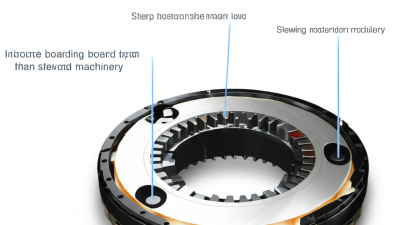
Slewing rings are crucial components in various machinery. They enable rotation and support heavy loads in cranes, excavators, and wind turbines. Typically, slewing rings consist of an inner and outer ring, equipped with rolling elements like ball or roller bearings. Understanding their construction is essential for effective selection.
According to industry reports, the global slewing bearing market is projected to reach $4 billion by 2027. Applications vary widely, from construction equipment to solar tracking systems. Each application demands specific characteristics from the slewing ring. For instance, wind turbine installations require rings with high load capacity and resistance to environmental stressors.
Choosing the right slewing ring involves considering factors like load type, operational speed, and environmental conditions. Many engineers overlook the importance of accurate load calculations. Inadequate assessments can lead to early failure or increased maintenance costs. Additionally, not all suppliers provide clear data on their products, making informed decisions challenging. Remember, a well-chosen slewing ring can enhance machinery efficiency and prolong service life.
Evaluating Load Requirements for Your Specific Project
When selecting a slewing ring, evaluating load requirements is crucial. Understanding the specific loads your project will encounter can guide your selection. Each project has unique needs. For instance, static loads differ from dynamic ones. It’s essential to consider both maximum loads and fluctuating forces.
Load capacity is not the only factor. You must also think about the load distribution over the slewing ring. An uneven distribution can lead to premature wear and potential failure. It's vital to assess how the loads will shift during operation. A heavy load on one side can easily cause issues.
Additionally, environmental factors play a role. High temperatures and humidity can impact load ratings. If your project involves extreme conditions, make sure to factor that into your calculations. Regular load assessments can prevent costly mistakes. Reflecting on initial assumptions is important. Load requirements may evolve as projects develop. Keeping an open mind about these changes can enhance your project's reliability.
Top 5 Tips for Choosing the Right Slewing Ring for Your Project
| Tip |
Description |
Load Requirement |
Recommended Size |
| 1. Evaluate Load Capacity |
Determine the maximum load your application will impose on the slewing ring. |
Up to 10,000 kg |
Diameter: 500mm |
| 2. Consider Speed Requirements |
Analyze the speed at which the slewing ring will operate to identify suitable options. |
Up to 15 RPM |
Diameter: 600mm |
| 3. Assess Environmental Conditions |
Consider factors like temperature, humidity, and exposure to contaminants that may affect performance. |
Various conditions (e.g., outdoor use) |
Diameter: 800mm |
| 4. Analyze Mounting Options |
Ensure the slewing ring can be easily mounted on your machinery or structure. |
Customized according to equipment |
Diameter: 700mm |
| 5. Consult Technical Specifications |
Review product datasheets and manufacturer recommendations to ensure compatibility. |
Based on manufacturer data |
Diameter: 900mm |
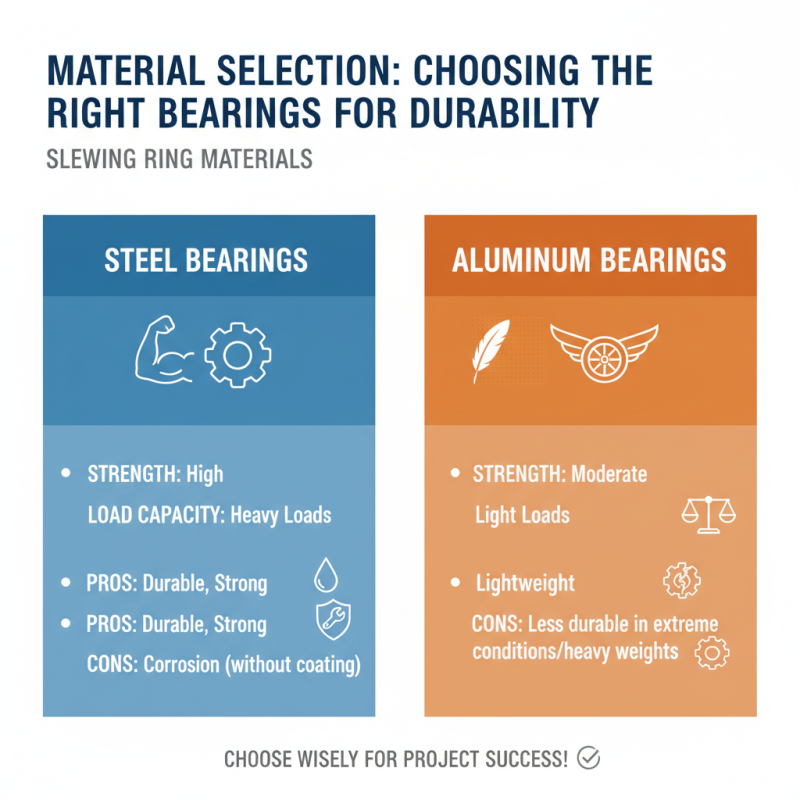
Material Selection: Choosing the Right Bearings for Durability
When selecting the right slewing ring for your project, material choice is crucial. Different materials offer varying levels of durability and performance. For example, steel is strong and can handle heavy loads, but may corrode without proper coatings. On the other hand, aluminum is lightweight but might not withstand extreme conditions or heavy weights.
Consider the environment where the slewing ring will operate. If it’s in a harsh setting with moisture or chemicals, look for corrosion-resistant materials. Stainless steel or specialized polymers could be beneficial. However, these materials might not provide the same load-bearing capacity as traditional steel.
It's also important to think about maintenance. Some materials require regular upkeep to maintain their performance. This can create additional costs and labor. Balance the need for durability with the practicalities of maintenance and cost. Each project has unique requirements, and getting the material choice right can significantly impact performance and longevity.
Considering Environmental Factors in Slewing Ring Selection
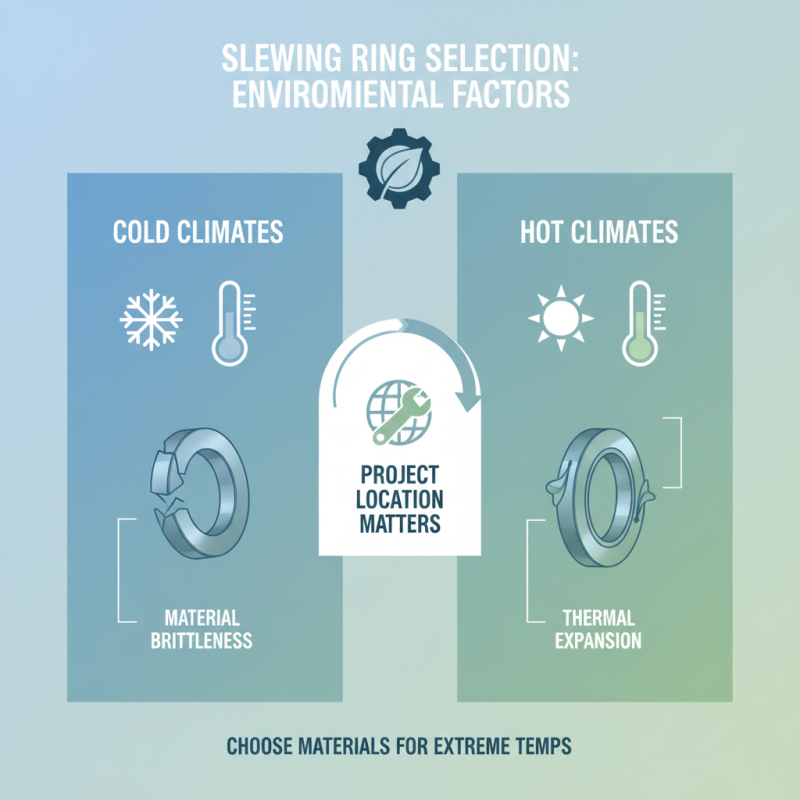
When choosing a slewing ring, environmental factors play a crucial role. Depending on the project location, conditions can vary significantly. For instance, extreme temperatures can affect material properties. In cold climates, some materials may become brittle. Conversely, high heat can lead to thermal expansion issues. It is essential to consider these characteristics during selection.
Additionally, exposure to moisture can cause corrosion over time. In humid or marine environments, protective coatings can be vital. Choosing stainless steel or specialized alloys might be necessary for added durability. Dust and debris are also common concerns. They can jeopardize the integrity of the slewing ring, leading to premature failure. Implementing seals or shields can mitigate these risks.
Ignoring these environmental aspects may lead to costly mistakes. A lack of consideration can result in increased maintenance and shortened lifespan. Evaluating the project site thoroughly encourages better decision-making. It’s a continual process that requires attention to detail and a willingness to adapt. Taking the time upfront can save significant resources down the line.
Assessing Manufacturer Reputation and Technical Support Availability
When selecting a slewing ring for your project, the manufacturer’s reputation plays a crucial role. A survey by the Slewing Ring Association revealed that over 70% of buyers prioritized experience and trust. An established manufacturer can often provide better quality assurance. Evaluate their history in the industry. Look for those with proven success in similar applications.
Consider the availability of technical support. Reliable support can make a significant difference during installation or maintenance. According to a report by the Engineering Insights Group, 60% of project delays stemmed from inadequate technical assistance. A manufacturer offering robust support can bridge gaps in knowledge. This is critical for complex projects requiring quick solutions.
Investigate user reviews and case studies. These offer real-world insights into performance and reliability. Online forums and industry publications can be valuable resources to gauge satisfaction. However, be cautious of overly positive testimonials. They may not reflect the full picture. Seek balanced feedback to make an informed decision.
Top 5 Tips for Choosing the Right Slewing Ring for Your Project
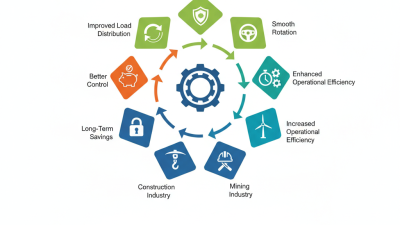
This chart illustrates the key factors to consider when selecting a slewing ring for your project, including manufacturer reputation, technical support availability, product quality, delivery time, and pricing competitiveness. These dimensions are crucial for ensuring a successful project outcome.

 +86-13349293098
 Contact WhatsApp
 Contact Email