 +86-13349293098
Leave Your Message
-
Contact Phone
-
 Contact WhatsApp
-
 Contact Email
A Rod Hydraulic Cylinder converts pressurized fluid into controlled linear force. Its exposed piston rod connects the cylinder to a load, making the design familiar in presses, mobile equipment, and manufacturing lines. The choice can look straightforward. It is not always so. Rod size, stroke length, mounting style, and operating pressure all affect performance.
Fluid-power author John Watton has written extensively about hydraulic systems and their control. A practical principle consistent with his engineering work can be stated this way: “Reliable motion begins with matching the actuator to the load and operating conditions.” This is an editorial paraphrase, not a verified verbatim quotation. It captures an important point: a cylinder should be selected around real duty, not catalog force alone.
In the field, details matter. A long stroke may raise buckling concerns; side loading can wear seals and guides. Dust, moisture, and temperature also influence rod finish and seal life. A rod-style cylinder can simplify inspection and servicing, but it may need space for the extending rod and protection against impact or corrosion. Measure the available clearance. Check the load path. Then compare expected cycle frequency with maintenance capacity. No cylinder fits every machine. Even a sound selection deserves review after installation, because actual alignment and operating loads can differ from the drawing.
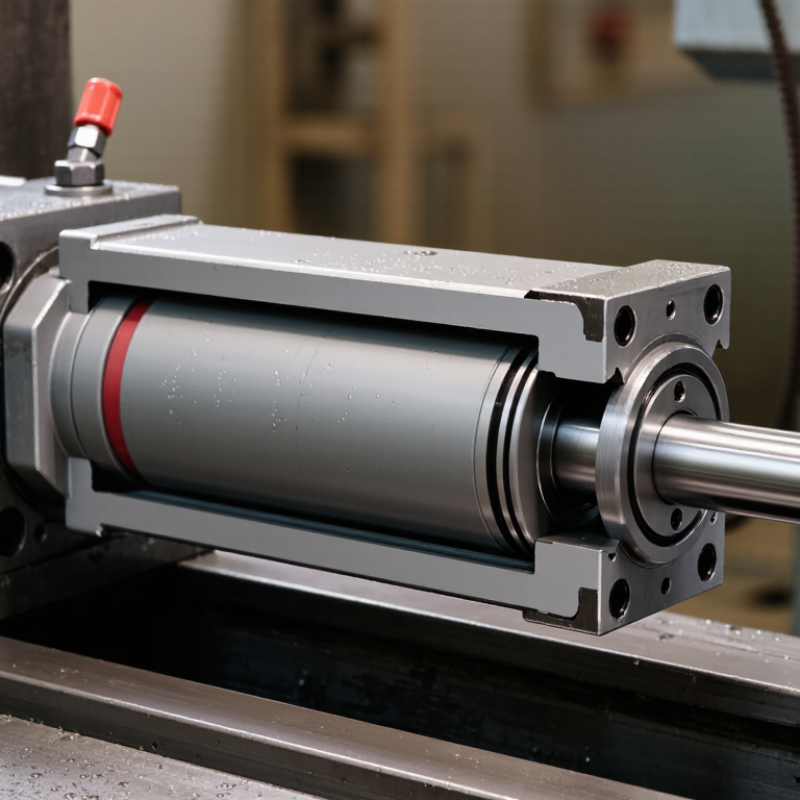
A rod hydraulic cylinder converts fluid pressure into straight-line force. Inside its barrel, a close-fitting piston separates two working chambers. A steel rod links the piston to a machine part and passes through a sealed end cap. When pressurized hydraulic fluid enters one port, it pushes the piston and extends the rod. Fluid on the opposite side leaves through a return line. Reverse the flow, and the piston retracts. That’s the cycle.
Most industrial models are double-acting, using pressure to extend and retract. Some single-acting cylinders rely on a spring or external load for the return stroke. Extension force depends mainly on fluid pressure and the piston’s full area. Retraction force is lower because the rod takes up part of that area. This difference matters when a cylinder must move a load in both directions. Seals limit leakage, while clean fluid helps reduce wear inside the barrel. Side loads can bend the rod or wear seals unevenly, a detail that is easy to overlook. Check mounting, stroke, pressure rating, and load direction before choosing a cylinder. The basic explanation is useful, but real systems are less tidy: cushioning, temperature, and fluid viscosity can all affect movement.
| Dimension | How It Works or What It Offers | Practical Considerations |
|---|---|---|
| Definition | A rod hydraulic cylinder converts pressurized hydraulic fluid into linear force and movement. A piston moves inside a cylinder barrel and is connected to an external rod. | It is commonly used when equipment needs controlled pushing, pulling, lifting, clamping, or positioning. |
| Main components | Typical components include a barrel, piston, piston rod, end caps, seals, and hydraulic-fluid ports. | Component materials, seal types, and construction vary according to pressure, fluid, environment, and duty cycle. |
| Extension stroke | In a typical double-acting cylinder, pressurized fluid enters the cap-end port and pushes the piston outward, extending the rod. | Extension force is based on pressure acting on the piston area, less losses such as friction and opposing pressure. |
| Retraction stroke | Fluid is directed to the rod-end port, moving the piston back into the barrel. Fluid on the opposite side returns through the hydraulic circuit. | Because the rod occupies part of the piston area, the effective area on the rod side is smaller. Retraction force is therefore generally lower than extension force at the same pressure. |
| Force relationship | Ideal hydraulic force is calculated as pressure multiplied by the effective piston area: F = P × A. | Use the full piston area for extension and the annular area (piston area minus rod area) for retraction. Actual output also depends on system losses and operating conditions. |
| Single-acting and double-acting types | A single-acting cylinder uses hydraulic pressure for movement in one direction and typically relies on a load, spring, or other mechanism for the return. A double-acting cylinder uses hydraulic pressure for both extension and retraction. | Choose the operating type based on whether powered movement is required in one direction or both. |
| Why choose a rod cylinder? | The rod provides a direct, accessible connection to a moving machine part, while the cylinder produces substantial linear force in a compact assembly. | Rod cylinders are a practical choice for many presses, mobile machines, material-handling systems, and industrial mechanisms. |
| Stroke and mounting | Stroke is the distance the rod travels between its retracted and extended positions. Mounting arrangements connect the cylinder to the machine and guide its movement. | Match the stroke and mounting style to the required motion. Side loads can accelerate wear, so the machine should guide the load appropriately. |
| Rod stability | The extended rod carries the applied load and may be subject to compression, bending, or buckling. | Long strokes and high compressive loads require careful sizing and support. Follow the cylinder manufacturer's load and installation guidance. |
| Pressure and maintenance | Seals help contain hydraulic fluid and keep contaminants out. The cylinder must operate within its specified pressure and service limits. | Inspect for leaks, rod damage, loose connections, and abnormal movement. Never exceed the rated pressure, and depressurize the system before servicing. |
Note: Cylinder force, speed, pressure rating, stroke, and service life depend on the specific design and operating conditions. Consult the equipment specifications when selecting or maintaining a cylinder.