+86-13349293098


Why Choose a Twist Cylinder for Global Sourcing?
Global sourcing is no longer only about finding the lowest factory price. Buyers now examine consistency, traceability, delivery resilience, and lifetime performance. A Twist Cylinder can support these goals when its design matches the equipment, load, operating environment, and maintenance plan.
The World Bank’s Logistics Performance Index 2023 shows that international supply chains still face delays, uneven infrastructure, and weak tracking visibility. McKinsey’s 2023 supply-chain research also found that many companies continue to experience disruption and are building stronger supplier networks. These findings matter on the factory floor. A poorly specified cylinder may cause leakage, misalignment, downtime, and expensive replacement shipping.
Small details matter.
Thread accuracy, seal selection, surface treatment, and test documentation can decide whether a Twist Cylinder performs reliably across markets. Experienced buyers should request drawings, material certificates, pressure-test records, inspection procedures, and sample approvals before placing volume orders. ISO 9001 certification helps, but it does not replace product-specific verification. That distinction is often missed.
Supply-chain expert Martin Christopher wrote, “Supply chains compete, not companies.” His point fits this product category. A capable Twist Cylinder supplier contributes more than machining capacity. It can provide engineering feedback, stable batch quality, protective packaging, and clear communication when specifications change.
The choice is not risk-free. Global sourcing can create language gaps, longer lead times, and difficult warranty handling. Yet a qualified supplier, supported by measurable controls, may deliver better value than a nearby source with inconsistent production. Buyers should compare total cost, not only the quotation. That comparison makes the sourcing decision more realistic.
Why Choose a Twist Cylinder for Global Sourcing?
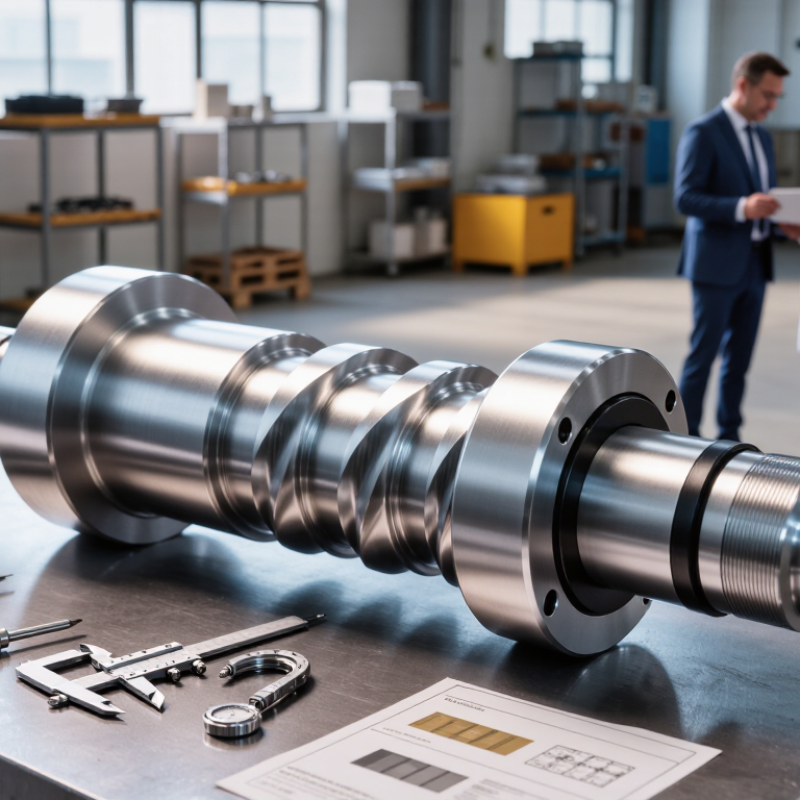
A twist-lock cylinder secures a shipping container by rotating its locking pin inside a corner fitting. The pin turns about 90 degrees and grips the casting firmly. This simple movement supports fast handling at ports, depots, and construction sites.
ISO 668:2020 defines standard container dimensions, including the common 20-foot and 40-foot formats. ISO 1161 specifies the corner fittings that receive twist-lock components. These standards help buyers check compatibility before placing international orders. A cylinder may look identical across suppliers, yet machining tolerances can differ. That difference matters when the pin feels stiff or fails to seat completely.
UNCTAD’s Review of Maritime Transport 2024 projected global maritime trade growth of 2.1% for 2024. More container movement increases demand for dependable securing hardware. During sourcing, request dimensional drawings, material certificates, load-test records, and corrosion-resistance details. Inspect the locking head, handle clearance, weld quality, and spring return. Test it with an actual ISO-sized corner fitting, not only a showroom sample.
There is a practical weakness here. ISO dimensions do not guarantee equal cylinder performance. Salt spray, grit, and poor lubrication can still shorten service life. A supplier with clear inspection records is usually safer than one offering only a lower price. Small details decide reliability.
Why Choose a Twist Cylinder for Global Sourcing?
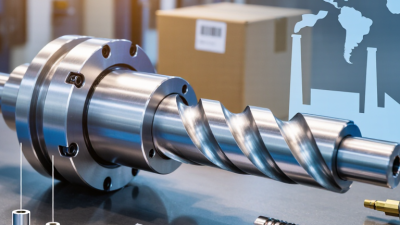
More than 80% of global merchandise trade by volume moves by sea, according to UNCTAD’s Review of Maritime Transport 2024. That figure changes how sourcing teams evaluate packaging and product design. A twist cylinder can support compact packing, consistent dimensions, and easier handling across long ocean routes. Its rounded structure spreads pressure more evenly than many irregular shapes. In a crowded container, that detail matters. Less empty space can also improve shipment efficiency.
UNCTAD reported that maritime trade grew by about 2.4% in 2023. It also warned that geopolitical tensions, rerouting, and port disruptions are increasing operational uncertainty. A practical cylinder design may simplify loading, counting, and inspection. Twist components can offer controlled access while helping protect contents from repeated handling. Small gains become meaningful across thousands of units.
But the choice is not automatic. Material thickness, closure tolerance, moisture resistance, and pallet patterns still need testing. I would request transit samples before approving a large order. Real cargo conditions are rougher than a factory table. The World Bank’s Logistics Performance Index 2023 also shows major differences in reliability between trading markets. A twist cylinder cannot solve every delay. Yet, when engineered with transport data in mind, it can make global sourcing more predictable. Testing remains essential.
A twist cylinder can simplify global sourcing, but only when safety data is checked beyond a product photograph. The ISO 6346 code identifies a container’s owner, size, type, and check digit. It does not certify a cylinder or guarantee direct interchangeability.
During inspection, match the cylinder’s bore, rod diameter, stroke, mounting centers, port position, and retracted length. A difference of five millimeters can prevent proper locking. Confirm the working pressure and rated load with the equipment manufacturer’s specifications. The container’s maximum gross mass appears on its safety plate. That figure should not be treated as the cylinder’s safe working load. Pressure, leverage, impact, and uneven loading can change actual forces.
Small details matter. Check the locking angle under no load and under a realistic container load. Inspect seals after repeated cycles, especially in cold ports or dusty yards. Ask for material certificates, pressure-test records, and dimensional drawings. These documents make supplier comparisons more reliable. They also expose vague claims.
Interchangeability is often assumed too early. ISO 6346 helps identify the container, not every mating component. A cylinder may fit one frame but fail on another because of pin tolerance or hose routing. I have seen technically correct parts require field modification. That is an avoidable weakness. Build a sample-fit test into the sourcing process, and record every measurement before approving volume production.
When sourcing a twist cylinder globally, quality evidence matters more than a polished product photograph. ISO 9001 certification can show that a supplier operates a controlled quality management system. It does not automatically prove that every cylinder performs well. Ask for the certificate’s validity, scope, issuing body, and production-site details.
ISO 9227 testing offers useful corrosion evidence for metal surfaces and protective finishes. However, salt spray hours should not be treated as a direct prediction of field life. Request the test method, exposure duration, sample condition, and photographs after testing. Check practical details too, such as key rotation, mounting fit, burrs, plating consistency, and torque. Small defects can become expensive during large-scale installation.
Cycle-life testing is equally important. A credible report should state the number of cycles, operating load, rotation angle, speed, lubrication, and failure criteria. Testing ten samples is more informative than testing one perfect sample. Still, laboratory movement may not reflect dust, humidity, or careless handling in real projects. That limitation deserves honest discussion. I would request pre-production samples, independent inspection, and lot-based records before approving a shipment. Sometimes the supplier’s documents look complete, yet the test conditions remain vague. That is a warning sign.
| Quality Dimension | Reference Standard or Evidence | What It Verifies | Recommended Data to Request from the Supplier | Sourcing Interpretation | Status |
|---|---|---|---|---|---|
| Quality management system | ISO 9001:2015 | Confirms that the manufacturing organization operates a documented quality management system based on process control, risk management, customer requirements, corrective action, and continual improvement. | Valid certificate number, certification scope, issuing certification body, certificate expiry date, manufacturing-site address, and latest surveillance or recertification status. | ISO 9001 certification supports process consistency, but it does not by itself certify the design, material, corrosion resistance, or service life of a specific twist cylinder. | Required Evidence |
| Incoming material control | Material certificates and incoming-inspection records | Demonstrates that metals, coatings, springs, seals, keys, and other purchased components conform to the approved specification before production. | Material grade, coating or plating specification, supplier batch number, certificate of conformity, dimensional inspection results, and traceability from incoming material to finished lot. | Traceability reduces the risk of uncontrolled substitutions and helps identify the source of defects during a field or receiving-quality investigation. | Required Evidence |
| Dimensional conformity | Approved technical drawing and inspection plan | Verifies critical dimensions such as body diameter, overall length, cam position, mounting interface, keyway or actuator interface, and mounting-hole geometry. | Drawing revision, sampling plan, calibrated instruments, measured values, tolerances, and lot-level inspection records. | Dimensional evidence is essential when the cylinder must fit an existing panel, enclosure, cabinet, latch, or cam mechanism without modification. | Verification Record |
| Corrosion resistance | ISO 9227:2022 Neutral salt spray test, NSS |
Provides a controlled laboratory method for exposing metallic or coated specimens to a salt-laden atmosphere and evaluating corrosion behavior under the selected test conditions. | Test method used, specimen condition, coating system, exposure duration, chamber conditions, photographs, corrosion-rating method, red-rust or white-corrosion observations, and deviations from the approved procedure. | ISO 9227 defines test methods and laboratory conditions; it does not establish a universal pass/fail exposure time or acceptance rating for every product. The purchase specification must define the acceptance criteria. | Required Evidence |
| Salt-spray acceptance criteria | Customer-approved product specification linked to ISO 9227 | Converts a corrosion test into a measurable purchasing requirement for the exact coating, substrate, geometry, and application environment. | Agreed exposure time, permitted corrosion locations, maximum corrosion area, exclusion zones such as cut edges, rating method, sample quantity, and retest rules. | A clear acceptance rule prevents suppliers from presenting an ISO 9227 test report without a defined interpretation of whether the tested finish is acceptable. | Define in PO |
| Operating cycle life | Documented product-specific cycle-life test protocol | Measures durability of the complete twist-cylinder assembly during repeated locking, unlocking, turning, key insertion, key removal, or actuator operation. | Target cycle count, torque or operating force, rotation angle, operating speed, fixture design, lubrication condition, environmental conditions, sample quantity, inspection intervals, and failure definition. | There is no single universal cycle-life value for every twist-cylinder design. The cycle target and pass/fail limits should be agreed according to the actual application and duty cycle. | Define in PO |
| Cycle-life acceptance result | Signed laboratory or factory test report | Shows whether each tested sample completed the specified cycles without unacceptable loss of function, excessive operating torque, key damage, seizure, or unsafe release. | Sample identification, production lot, starting measurements, cycle count completed, intermediate measurements, final measurements, failures, corrective actions, operator approval, and test-date records. | Use lot-specific evidence where possible. A generic historical test report should not automatically be treated as proof for a new design, material, coating, or production lot. | Required Evidence |
| Functional performance | Approved functional inspection plan | Confirms that the cylinder locks and unlocks correctly, the key or actuator operates smoothly, the cam reaches the intended position, and the assembly maintains retention after operation. | Operating torque or force limits, key insertion and removal criteria, cam travel, locked and unlocked positions, retention check, visual defects, and final inspection sampling level. | Functional checks connect laboratory durability results to actual installation and user operation. | Verification Record |
| Production consistency | Control plan and statistical inspection records | Demonstrates that critical characteristics are monitored throughout production rather than checked only after final assembly. | Process checkpoints, control limits, inspection frequency, nonconforming-product procedure, rework authorization, corrective-action records, and lot-release approval. | Consistent process controls are particularly important for high-volume global sourcing, where a small dimensional or coating change can affect interchangeability and durability. | Required Evidence |
| Calibration and measurement integrity | Calibration records for inspection and test equipment | Confirms that torque testers, force gauges, dimensional tools, salt-spray monitoring instruments, and cycle counters are suitable and within calibration. | Equipment identification, calibration date, due date, traceability to a recognized measurement standard, accuracy or uncertainty where applicable, and out-of-calibration handling procedure. | Test results are more credible when the measurement system and equipment status are documented and traceable. | Required Evidence |
| Pre-shipment release | Final inspection and certificate of conformity | Confirms that the shipped lot matches the approved drawing, bill of materials, finish, packaging, quantity, and agreed inspection requirements. | Purchase-order number, lot number, quantity, inspection date, sampled dimensions, functional results, coating verification, packaging checks, deviations, and authorized release signature. | A lot-specific release package provides practical evidence that the products shipped for global sourcing match the qualified configuration. | Verification Record |
Why Choose a Twist Cylinder for Global Sourcing?
A twist cylinder can reduce total landed cost when its durability offsets a higher purchase price. The calculation must include tooling, ocean freight, port handling, inspection, repairs, and replacement inventory. Drewry’s World Container Index recorded an average rate of about US$1,382 for a 40-foot container in October 2023. By July 2024, the index exceeded US$5,800, showing how quickly freight assumptions can fail (Drewry, World Container Index). A compact cylinder may therefore save space, but the benefit depends on actual container utilization.
Risk matters too. UNCTAD reports that maritime transport carries over 80% of global merchandise trade, making disruptions financially significant (Review of Maritime Transport 2023). A twist cylinder with standardized connections can simplify local servicing and reduce emergency shipments. Its sealed design may also limit contamination during storage and inland transfer. These are practical advantages, not automatic savings.
Use a landed-cost spreadsheet.
Compare two scenarios over twelve months. Include defect rates, lead time, safety stock, customs processing, and currency movement. The World Bank’s Logistics Performance Index 2023 shows major differences in customs, infrastructure, and delivery reliability across sourcing markets. That variation can outweigh a small unit-price gap. Still, product claims need field testing. A twist cylinder may perform well in controlled trials yet fail under vibration, salt air, or inconsistent maintenance. The honest comparison includes those uncomfortable possibilities.