 +86-13349293098
Leave Your Message
-
Contact Phone
-
 Contact WhatsApp
 -
 Contact Email
Choosing the right Compact Hydraulic Cylinder manufacturer in 2026 requires more than comparing catalog prices. Buyers should examine engineering depth, material traceability, sealing performance, testing procedures, and after-sales support. A cylinder may look identical on paper. Its service life can differ dramatically in a dusty factory, a mobile machine, or a washdown environment.
Hydraulic systems specialist Dr. S. R. Majumdar wrote, “The hydraulic cylinder is the simplest and most common type of hydraulic actuator.” That observation remains useful, but simplicity can mislead. A compact design still demands accurate machining, controlled tolerances, reliable rod coatings, and correctly selected seals. These details decide whether motion stays smooth under pressure.
This guide evaluates the best Compact Hydraulic Cylinder manufacturers for 2026 through practical criteria. We consider product range, customization capability, pressure ratings, quality certification, delivery consistency, and field experience. Evidence matters.
Real machines reveal the truth.
The strongest manufacturers usually document endurance testing and explain their design limits. They do not promise unlimited performance. They identify suitable fluids, temperatures, mounting conditions, and duty cycles. That honesty deserves attention.
Some rankings may remain debatable. A supplier with excellent engineering may not offer the fastest delivery. Another may provide lower prices but weaker technical support. Regional service also changes the buying decision. Therefore, this overview is a working comparison, not a permanent verdict. Readers should verify current specifications, certifications, and warranty terms before placing an order.
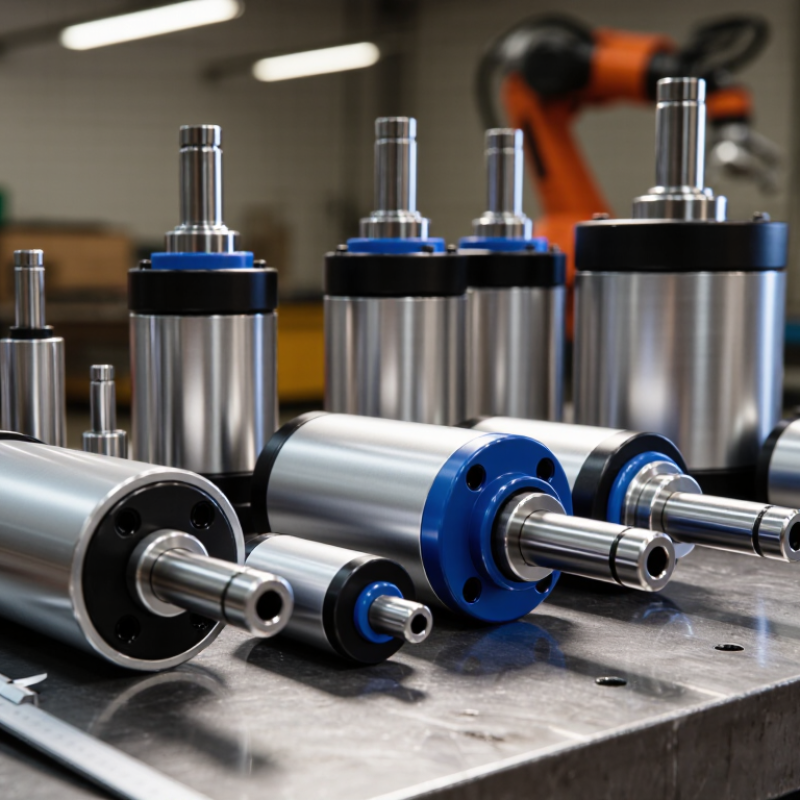
In 2026, a compact hydraulic cylinder manufacturer is defined by verified performance, not a smaller outer diameter. Compactness must preserve force, service life, and safe maintenance access. Grand View Research estimated the global hydraulic cylinders market at about USD 14.9 billion in 2023. Its outlook points to steady growth through 2030. That growth raises the standard.
A credible manufacturer documents bore tolerance, rod hardness, seal compatibility, and pressure testing. It should provide load charts for real working conditions, not ideal laboratory figures. MarketsandMarkets projected continued growth in hydraulic cylinders through 2028, driven partly by construction equipment and industrial automation. This demand makes traceability more important. Each cylinder should connect to material certificates, inspection records, and batch-level test results.
Field experience often reveals what brochures miss. A cylinder may fit a narrow machine frame but leave no room for seal replacement. That is a design failure, even if the drawing looks excellent. Manufacturers should test leakage, side loading, corrosion resistance, and repeated cycles before delivery. ISO 6020 and ISO 6022 dimensions can support interchangeability, but compliance alone cannot guarantee field reliability. No checklist is perfect. Buyers should still inspect samples, review failure data, and question unusually high service-life claims. A strong compact-cylinder manufacturer explains limitations clearly, supports repairs, and improves designs after real operating feedback.
A practical, brand-neutral benchmark for evaluating compact hydraulic cylinder manufacturers based on engineering capability, documented performance, manufacturing quality, and application support.
| Evaluation Dimension | Recognized 2026 Benchmark | What a Qualified Manufacturer Should Demonstrate | Importance | Typical Applications |
|---|---|---|---|---|
| Compact Form Factor | Short overall length with a high force-to-envelope ratio | Provide dimensional drawings, retracted-length data, port locations, mounting details, and available compact cartridge or welded configurations. | High | Material-handling equipment, agricultural machinery, mobile hydraulics, and compact automation. |
| Bore and Rod Range | Application-specific bore and rod combinations rather than one-size-fits-all designs | Offer calculated thrust and retraction-force data using the formulas F = pA and provide rod-buckling or side-load guidance where relevant. | High | Clamping, lifting, steering, positioning, and compact actuation systems. |
| Pressure Capability | Clearly defined continuous and maximum working-pressure ratings | Publish pressure ratings for the complete cylinder assembly, including tube, piston, rod, seals, ports, and end closures; distinguish proof pressure from working pressure. | High | Industrial hydraulic power units, construction machinery, presses, and mobile equipment. |
| Stroke Flexibility | Configurable stroke lengths matched to the installation envelope | Support engineered stroke options, provide minimum and maximum stroke limits, and identify any limitations caused by rod slenderness, cushioning, or mounting geometry. | High | Short-cycle machinery, access platforms, agricultural implements, and automated fixtures. |
| Mounting Options | Multiple mounting styles with controlled alignment requirements | Provide clevis, trunnion, flange, foot, spherical-eye, and threaded mounting options where applicable, together with allowable misalignment and side-load limits. | High | Pivoting linkages, articulated equipment, machine tools, and lifting mechanisms. |
| Materials and Surface Protection | Material selection based on pressure, fatigue, corrosion, and environment | Document tube and rod materials, rod surface treatment, corrosion-protection options, weld quality controls, and compatibility with outdoor or washdown environments. | High | Marine equipment, outdoor machinery, forestry equipment, and corrosive industrial environments. |
| Seal-System Engineering | Seals selected for fluid, temperature, speed, pressure, and contamination conditions | State seal materials and operating limits, including compatibility with common mineral hydraulic oils, temperature ranges, leakage expectations, and wiper performance. | High | High-cycle automation, mobile hydraulics, cold-weather equipment, and dusty operating environments. |
| Cushioning and Motion Control | Optional end-of-stroke cushioning for controlled deceleration | Provide adjustable or fixed cushion options, recommended velocity limits, and guidance for preventing impact loads at the end of the stroke. | Medium | High-speed actuators, handling systems, presses, and repetitive automation. |
| Manufacturing Tolerances | Consistent bore geometry, rod straightness, surface finish, and seal-groove accuracy | Maintain documented inspection plans for critical dimensions and provide traceable measurement records for production or safety-critical orders. | High | Precision positioning, synchronized actuators, and long-life industrial systems. |
| Testing and Validation | Documented pressure, leakage, dimensional, and functional testing | Use defined test procedures for pressure holding, external leakage, internal bypass, stroke operation, and final visual inspection; retain batch or serial traceability. | High | Safety-related machinery, OEM production, infrastructure equipment, and regulated projects. |
| Standards and Documentation | Clear technical documentation aligned with applicable hydraulic-cylinder standards | Supply datasheets, CAD files, installation instructions, maintenance guidance, material information, and applicable conformity documentation. ISO 10100 may be used as a reference for hydraulic-cylinder acceptance testing. | High | Global OEM programs, industrial procurement, engineering approval, and maintenance planning. |
| Customization Capability | Controlled customization without compromising repeatability | Support custom ports, sensors, mounting geometry, coatings, seal packages, stroke lengths, and integrated position feedback with formal design reviews and change control. | High | Special-purpose machinery, robotics, factory automation, and retrofit projects. |
| Digital Engineering Support | Accessible technical data for faster product selection and integration | Offer downloadable 2D and 3D CAD files, configuration data, force calculations, dimensional selectors, installation information, and revision-controlled documentation. | Medium | Distributed engineering teams, rapid prototyping, and digital procurement workflows. |
| Supply-Chain Reliability | Stable sourcing, repeatable production, and transparent delivery commitments | Demonstrate capacity planning, component traceability, spare-seal availability, quality escalation procedures, and realistic lead-time communication. | High | High-volume OEM production, aftermarket service, and critical replacement programs. |
| Lifecycle Service | Repairability and technical support throughout the cylinder lifecycle | Provide seal kits, repair instructions, troubleshooting support, replacement-part identification, warranty terms, and guidance on safe removal and installation. | High | Fleet maintenance, heavy equipment, industrial plants, and long-term infrastructure assets. |
| Total Cost of Ownership | Performance and service life considered alongside purchase price | Evaluate leakage rate, expected duty cycle, maintenance intervals, energy losses, downtime risk, spare-part cost, and field-replacement requirements. | High | Fleet operators, production lines, energy-intensive systems, and lifecycle-cost procurement. |
Note: Actual pressure, speed, force, stroke, temperature, and service-life limits must be confirmed from the selected cylinder design and application conditions. Manufacturer comparisons should be based on verified technical documentation and application-specific testing.