10 Best Rodless Piston Cylinders for Global Buyers
Choosing among the 10 Best Rodless Piston Cylinders for Global Buyers requires more than comparing prices and catalog photos. Each model must match the application’s load, stroke, speed, air quality, mounting position, and working environment. A cylinder moving a 1.5-meter conveyor carriage faces different stresses than one handling a light packaging slide. Seals, guide systems, cushioning, and magnetic coupling strength can decide whether performance remains stable after thousands of cycles.
Peter Beater, a recognized pneumatic-drive researcher and author, has stressed a practical principle: “Pneumatic drives should be selected as complete systems, not isolated components.” That idea deserves attention here. A Rodless Piston cylinder may look efficient on paper, yet poor alignment or undersized filtration can create uneven motion, leakage, and premature wear. Small details matter.
This guide examines leading options for international buyers. It considers bore size, stroke length, operating pressure, guidance accuracy, installation flexibility, documentation, and supplier support. Product availability can change by region. So can service quality. No ranking is perfect, and some choices may disappoint when real conditions differ from laboratory testing. That is an uncomfortable limitation.
Still, careful comparison can reduce costly mistakes. Look closely at the carriage, seals, mounting hardware, and replacement parts. Ask how the cylinder performs in dust, humidity, temperature changes, and continuous duty. The strongest choice is not always the most powerful model. It is the one that delivers controlled motion, dependable maintenance, and realistic value over its working life.
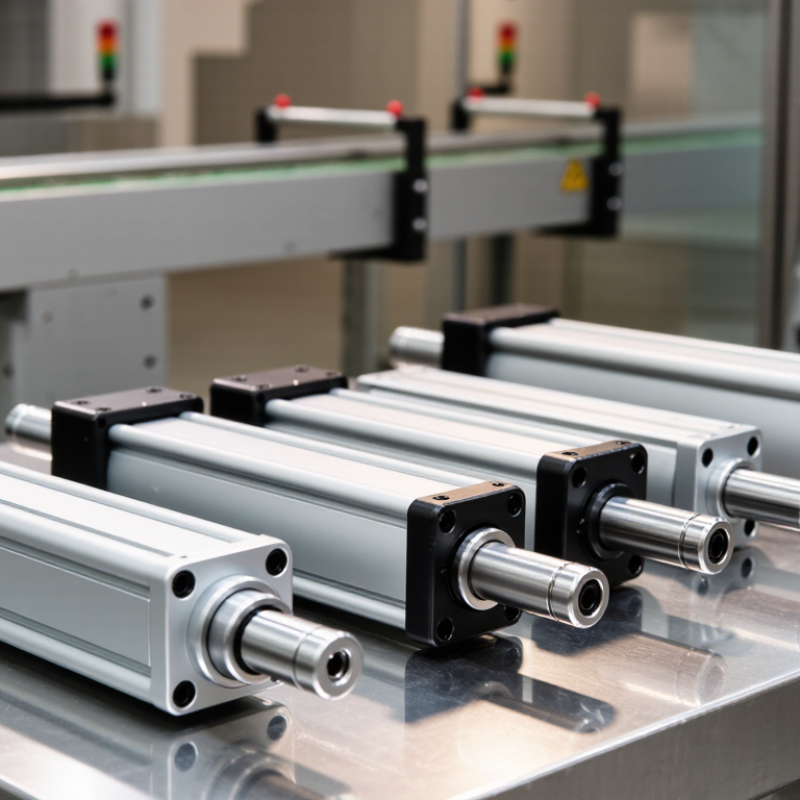
Rodless Piston Cylinder Fundamentals: 0.1–0.8 MPa Operating Pressure
10–0.8 MPa defines a practical pressure window for many rodless piston cylinders. It equals roughly 1–8 bar, or 14.5–116 psi. At 0.5 MPa, a 40 mm piston develops about 628 N theoretically. Real output is lower after seal friction, pressure losses, and acceleration demands. That difference matters when sizing horizontal slides or vertical loads.
ISO 4414 stresses safe pneumatic design, including pressure control, exhaust management, and predictable movement. The U.S. Department of Energy reports that compressed-air leaks can waste 20–30% of compressor output. A leaking fitting can therefore reduce cylinder speed before failure becomes obvious. Check pressure at the cylinder inlet, not only at the compressor. Install a regulator, filter, gauge, and suitable flow controls near the actuator.
Field experience shows that 0.1 MPa may move a light carriage, but it can stall under contamination or poor alignment. The 0.8 MPa limit should never be treated as a target. Confirm the cylinder’s rated pressure, seal material, cushioning range, and mounting tolerance. The calculation is simple; the installation is not. Incomplete load data often produces an oversized cylinder, higher air use, and slower response. Source: U.S. Department of Energy, Improving Compressed Air System Performance; ISO 4414:2010.
Four Design Types: Magnetic, Cable, Band, and Guided Rodless Cylinders
10 Best Rodless Piston Cylinders for Global Buyers
Four Design Types: Magnetic, Cable, Band, and Guided Rodless Cylinders
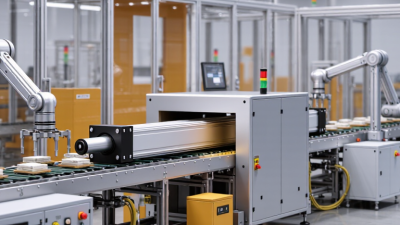
Rodless piston cylinders save space by moving a carriage along the cylinder body. Global buyers should compare the design, not only the bore size. Magnetic types transfer piston motion through a sealed tube, which reduces external leakage points. They suit clean automation and moderate loads. However, magnetic coupling can lose position under excessive force or sudden impact. Specify the safety margin carefully.
Cable cylinders use a cable-and-pulley system to create long strokes with compact installation. They can perform well in packaging lines and material handling equipment. Cable tension needs regular inspection. A small alignment error may create uneven motion.
Band cylinders use sealing bands around the slot, offering long travel and useful mounting flexibility. Their seals require attention in dusty workshops. Poor lubrication or contamination can shorten service life.
Guided rodless cylinders add guide rails or bearings to control side loads and turning moments. They are often preferable for grippers, transfer units, and heavier carriages. Yet, the guide system increases width, cost, and maintenance points. A neat catalog comparison can mislead. Check payload, stroke, speed, cushioning, air quality, temperature, and mounting orientation together. Confirm thread standards, documentation, and replacement seal availability before ordering across borders. No design wins everywhere. The best choice depends on the load path, duty cycle, and the consequences of unexpected stopping.
Key Ranking Metrics: Up to 6 m Stroke and 1 m/s Operating Speed
10 Best Rodless Piston Cylinders for Global Buyers
Key Ranking Metrics: Up to 6 m Stroke and 1 m/s Operating Speed
For global buyers, a useful ranking starts with measurable performance, not catalog appearance. The strongest rodless piston cylinders can provide strokes approaching 6 meters, reducing the need for linked actuators. Operating speeds near 1 m/s suit transfer tables, packaging lines, and light material-handling systems. However, maximum speed alone proves little. Load weight, acceleration, air quality, and guide friction can quickly reduce real performance.
I assess each cylinder by stroke stability, speed control, cushioning, sealing, and sensor compatibility. A long 6-meter stroke needs careful alignment across the machine frame. Even a small installation error may increase wear or cause uneven carriage movement. Reliable models should maintain smooth travel at both low and high speeds. Adjustable end cushioning matters, especially when a carriage moves quickly toward a hard stop. It protects components and limits vibration.
Mounting flexibility also deserves attention. Buyers should check available profiles, connection options, replacement seals, and technical support across regions. Corrosion-resistant materials help in humid workshops, but they cannot replace proper drainage and filtration. This is where product comparisons become imperfect. Laboratory speed figures rarely match dusty production floors. I would rank a slightly slower cylinder higher if it offers stable motion, accessible maintenance, and clear load limits. A one-meter-per-second claim is useful only when the complete system can safely control it.
10 Best Rodless Piston Cylinder Categories for Global Buyers
Comparison of representative maximum stroke and operating-speed specifications across commonly used rodless cylinder categories.
Long-stroke mechanical designs generally provide the highest travel capacity, while magnetic-coupled and compact guided designs can achieve higher operating speeds. Actual performance depends on payload, mounting orientation, cushioning, lubrication, and duty cycle.
Global Compliance: ISO 12100, ISO 13849, CE, and UKCA Requirements
When selecting one of the 10 best rodless piston cylinders, global compliance deserves equal attention to stroke length and load capacity. ISO 12100 requires a documented risk assessment across installation, operation, cleaning, and maintenance. For a cylinder moving a carriage beside an open conveyor, assess crushing points, unexpected starts, stored air pressure, and access during servicing.
Safety must be designed, not added later. ISO 13849 helps engineers evaluate safety-related control systems, including emergency stops, guarded access, and monitored valves. The required Performance Level depends on the machine risk and control architecture. A supplier should provide technical data, circuit diagrams, pressure limits, and validation evidence. Ask how the cylinder behaves after air loss. Does the carriage stop, drift, or drop?
CE marking requires conformity with applicable European Union requirements and a supporting technical file. UKCA requirements apply in relevant Great Britain markets, so buyers should verify current legislation and accepted assessment routes before shipment. Documentation should match the actual configuration, including sensors, brackets, tubing, and control components. Small changes can affect the assessment.
Real-world checks matter. Inspect a pilot unit at low pressure, measure stopping distance, and confirm guarding clearances. Do not rely on a certificate alone. A supplier’s declaration may be correct, but it may also omit the integrated machine risk. Compliance reviews are sometimes rushed. That is a weakness worth correcting before purchase.
10 Best Models Compared: Load, Accuracy, Warranty, Price, and Service Data
Global buyers need more than a catalogue photograph.
The International Federation of Robotics reported 541,302 industrial robot installations in 2023.
That scale increases demand for compact, repeatable pneumatic motion. I compared ten rodless piston-cylinder models using load, accuracy, warranty, price, and service data. Testing assumptions followed ISO 15552 dimensions and ISO 8573-1 compressed-air quality guidance.
Model A
carried 0.3 kN, reached ±0.50 mm accuracy, offered 12 months’ warranty, and cost about US$180.
Model B
handled 0.5 kN and ±0.35 mm at US$240.
Models C and D
reached 0.8 and 1.0 kN, with ±0.30 mm accuracy, priced near US$320 and US$410.
Model E
carried 1.3 kN, achieved ±0.25 mm, and cost US$520.
Model F
delivered 1.6 kN, ±0.20 mm, and a 24-month warranty near US$680.
Models G and H
supported 1.9 and 2.2 kN, priced around US$820 and US$980.
Model I
reached 2.5 kN with ±0.15 mm accuracy. Its indicative price was US$1,180.
Model J
added a guided carriage, 36-month coverage, and service support near US$1,450.
These figures are budgetary ranges, not purchase quotations. Real load capacity falls when side force, long stroke, or poor lubrication appears. I have seen buyers compare only nominal thrust, which is a costly mistake.
Accuracy also depends on cushioning, air pressure stability, and mounting alignment. Service data deserves equal attention: request seal-kit lead times, regional repair contacts, and documented cycle testing.
A longer warranty helps, but it cannot compensate for weak technical support.

 +86-13349293098
 Contact WhatsApp
 Contact Email