+86-13349293098


Why Choose Rodless Piston for Industrial Automation? The answer begins with space, speed, and controlled movement. A conventional cylinder needs a projecting rod and extra clearance. A Rodless Piston travels inside the cylinder profile, making it useful for compact conveyors, packaging stations, and pick-and-place equipment.
The numbers support this design conversation. The International Federation of Robotics reported 541,302 industrial robots installed worldwide in 2023. That figure shows continuing investment in automated production. Deloitte’s 2023 Smart Manufacturing Survey also found that many manufacturers view smart manufacturing as a major competitiveness priority. Pneumatic motion remains relevant because it offers simple control, fast cycling, and practical maintenance. In a crowded machine frame, every saved millimeter matters. A shorter layout can reduce guarding changes and simplify operator access.
John Rinaldi, a recognized pneumatic-controls educator and consultant, states, “The best pneumatic system delivers the required motion with the least complexity.” This principle explains the appeal of Rodless Piston technology. It can support long strokes without a long external rod, while magnetic coupling or mechanical connection transfers motion efficiently.
However, this is not a magic fix. Side loads, seal wear, contamination, and inaccurate sizing can reduce performance. Engineers must examine load direction, stroke length, air consumption, cushioning, and duty cycle before selecting a model. The Global Pneumatics Market reports from MarketsandMarkets indicate continuing demand across automation, packaging, and material-handling applications. Still, market growth does not guarantee a suitable installation. Good results come from measured requirements, clean air, correct alignment, and realistic maintenance planning.
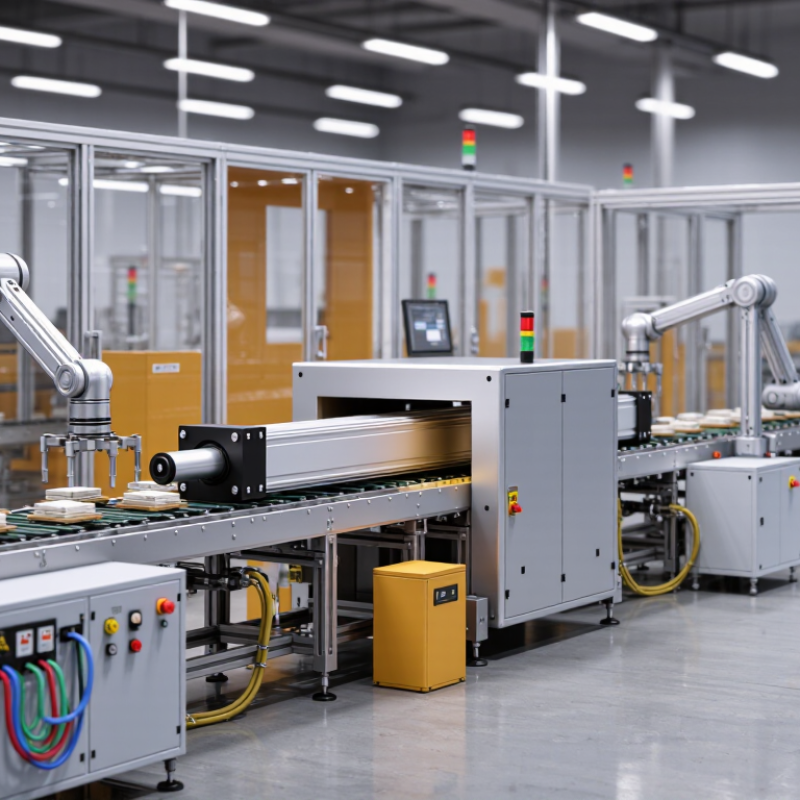
Rodless pistons are pneumatic actuators that move a carriage along a sealed cylinder. Unlike traditional cylinders, they do not push a rod outside the barrel. Compressed air drives an internal piston, while magnetic coupling or a mechanical band transfers motion to the external carriage. This design saves space beside the actuator. It also supports long, straight strokes in compact machine layouts.
In practical automation, rodless pistons move trays, grippers, sensors, and cutting heads. A packaging line may use one to slide cartons across a guide rail. A clean installation can reduce interference with nearby conveyors. The actuator still needs careful alignment, cushioning, and load calculation. Poor guidance can create side forces and shorten seal life. That detail is easy to overlook.
The demand for compact motion systems is growing with factory automation. The International Federation of Robotics reported 541,302 industrial robots installed worldwide in 2023, showing the scale of automated production. Rodless pistons can complement robotic cells by handling simple linear transfers. They often use less floor space than rod-style cylinders with equal travel. However, “more compact” does not always mean “more efficient.” Air leakage, pressure losses, and oversized components can raise operating costs. Engineers should verify force, speed, duty cycle, and environmental requirements against ISO 12100 risk-assessment principles and the actuator manufacturer’s test data. Real machines are rarely perfect. Feedback from maintenance teams matters.
Why Choose Rodless Pistons for Industrial Automation?
A rodless piston moves a carriage along the cylinder body instead of pushing a projecting rod. Compressed air enters one chamber and pushes the internal piston forward. A sealed mechanical band or magnetic coupling transfers that force to the external carriage. When a directional valve reverses airflow, the piston returns. Adjustable cushions slow the carriage near each end, reducing impact and vibration.
The design is compact. It can provide a long stroke without requiring a longer safety clearance for an extended rod. That matters on packaging lines, pick-and-place equipment, and narrow transfer stations. The International Federation of Robotics reported 541,302 industrial robots were installed worldwide in 2023. This growth increases demand for compact, repeatable pneumatic motion. However, rodless pistons are not automatically efficient. The U.S. Department of Energy’s compressed-air guidance warns that system leaks can waste 20–30% of compressor output. Poor seals, side loads, and incorrect cushioning can also reduce accuracy.
Small details matter. Technicians should align the carriage, inspect sealing bands, and measure pressure at the actuator inlet. A heavy load may need external guides, because the piston should not absorb excessive bending force. Magnetic coupling also deserves careful testing. It may lose synchronization under shock or overload. The technology is practical, but not foolproof. That limitation is easy to overlook.
Rodless pistons support efficient automated motion by moving a carriage along the cylinder body. This design saves installation space, especially where a traditional piston rod needs extra clearance. In a narrow packaging line, that difference can protect nearby sensors, frames, and operators from unnecessary interference.
A guided carriage helps transfer force across a controlled path. However, the guide must match the load and movement direction. Side loads can increase friction and shorten seal life. This detail is often missed. Selecting suitable bearings, mounting supports, and alignment tolerances keeps motion stable during repeated cycles. Adjustable cushioning also reduces impact when the carriage reaches each stroke end. The result is quieter movement and less vibration around cameras or grippers.
Sensors add practical control. Position switches or non-contact sensors can report carriage location to the automation system. Accurate feedback supports timed feeding, sorting, and pick-and-place operations. Sealed construction can also help in dusty production areas, although no actuator is maintenance-free. Regular inspection of seals, fasteners, and air connections remains necessary. I have found that small pressure losses can appear as slow, uneven travel before they become obvious faults.
Efficiency depends on more than speed. Low friction, suitable operating pressure, compact mounting, and proper load distribution all matter. A rodless piston may look simple, but careless alignment can cancel its space-saving advantage. Real installations deserve testing under the actual load, cycle rate, and environmental conditions.
In industrial automation, floor space is rarely free. Rodless pistons move a carriage along the cylinder body instead of extending a shaft. This design creates useful advantages where conventional cylinders become awkward. A long stroke can fit inside a machine frame without extra rod clearance. Less wasted space matters. Their enclosed profile also protects moving components from accidental contact and nearby equipment.
Engineers often choose rodless pistons for smooth linear handling, positioning, and transfer applications. The carriage can travel quickly while maintaining consistent motion, provided the air supply and control valves are correctly sized. External guides support heavier loads and reduce twisting forces on the piston system. Installation can be cleaner. Air lines stay close to the machine structure, which helps simplify routing and maintenance access. In real commissioning work, this compact arrangement can shorten adjustment time, especially when several axes share limited space.
Rodless pistons are not perfect for every application. Side loads, uneven mounting, dust, and poor lubrication can reduce service life. A separate guide may be essential. Small errors matter. Before selection, technicians should check stroke length, payload, speed, stopping method, seal requirements, and the surrounding environment. Magnetic designs may offer sealed operation, while mechanically coupled designs can provide different force and feedback characteristics. The practical choice depends on testing, not appearance alone. A compact cylinder can still fail when its guide, cushioning, or air preparation is overlooked.
| Performance Dimension | Typical Technical Characteristics | Advantage in Industrial Automation | Common Application Examples |
|---|---|---|---|
| Space Efficiency | The actuator body contains the piston and uses a carriage or external coupling instead of a projecting piston rod. | Reduces the installation envelope at the rod end and helps simplify layouts where conventional cylinders require additional clearance. | Compact transfer units, material-handling modules, and machine frames with limited linear space. |
| Stroke Length | Available strokes are commonly selected from a few hundred millimetres to several metres, depending on cylinder design and load requirements. | Provides long linear travel without requiring an equally long rod to extend beyond the cylinder body. | Conveyor positioning, gantry-style motion, door systems, and long-axis pushing or pulling operations. |
| Bending and Buckling Risk | The moving element is guided along the cylinder body rather than being a long unsupported rod. | Eliminates the rod-buckling concern associated with long-stroke compression applications and can improve motion stability. | Horizontal slides, pick-and-place equipment, and extended travel mechanisms. |
| Motion Speed | Operating speed depends on bore size, pressure, payload, cushioning, and control-valve selection; many pneumatic versions support fast reciprocating motion. | Supports rapid cycling while maintaining a compact actuator arrangement when correctly sized and controlled. | Sorting, indexing, packaging, light assembly, and repetitive positioning tasks. |
| Load Guidance | The carriage may include plain, roller, or externally supported guides. The actuator itself should not automatically be treated as the sole structural guide. | Allows the drive and load-support functions to be designed separately, improving flexibility and reducing side-load stress on the actuator. | Linear transport axes, inspection stations, and guided tooling systems. |
| Mounting Flexibility | Common mounting arrangements include side, end, and custom bracket configurations, subject to the cylinder construction. | Makes it easier to integrate the actuator into modular automation frames and retrofit existing equipment. | Machine tools, production-line upgrades, and configurable automation cells. |
| Maintenance Requirements | Maintenance typically includes checking seals, guides, lubrication requirements, air quality, alignment, and external contamination. | A well-maintained rodless design can reduce problems caused by exposed rod misalignment, but sealing and carriage condition remain important. | Continuous-duty production equipment and applications requiring predictable uptime. |
| Cleanliness and Environment | Sealed designs can limit the exposure of internal components; suitability depends on seal type, enclosure, particles, moisture, and cleaning agents. | Can be selected for environments where an exposed piston rod could collect contaminants or interfere with nearby components. | Packaging, textile, woodworking, and general factory automation, with appropriate environmental protection. |
| Energy and Utility Use | Pneumatic versions consume compressed air during movement and are influenced by operating pressure, leakage, cycle rate, and load. | The compact architecture can support efficient machine design, although actual energy savings depend on system sizing and air-management practices. | High-cycle automation lines where compressed-air consumption is monitored and controlled. |
| Control and Positioning | Basic systems provide end-to-end motion; sensors, proportional valves, mechanical stops, or external position feedback can add intermediate positioning. | Offers a scalable path from simple two-position movement to monitored multi-position automation. | Indexing, workpiece transfer, machine guarding, and automated loading systems. |
| Safety and Operator Access | The absence of a long projecting rod can reduce the number of moving parts extending into adjacent work areas. | May help create cleaner machine layouts and reduce interference with guarding, fixtures, and operator access zones. | Guard doors, ergonomic workstations, and enclosed production machinery. |
| Design Considerations | Performance is affected by side load, carriage moment, sealing method, pressure, temperature, stroke, speed, and required positioning accuracy. | Provides strong design flexibility when the actuator is selected according to the complete motion profile rather than stroke length alone. | Custom automation systems requiring load calculations, guided motion, and application-specific sizing. |
Note: Actual capacity, speed, pressure range, stroke, and environmental suitability vary by actuator construction and application conditions. Final selection should be based on load, travel, cycle rate, guidance, air quality, and safety requirements.
Rodless pistons are used where machines need long, controlled travel without a projecting piston rod. Their compact profile suits narrow production cells, conveyor transfer units, packaging lines, and automated inspection stations. In these systems, the carriage moves beside the cylinder, leaving fewer parts exposed to collision or bending. That detail matters near pallets, sensors, and guarded tooling.
Industrial demand supports this application. The International Federation of Robotics reported 541,302 industrial robots installed worldwide in 2023, showing continued investment in automated movement and handling. The World Robotics 2024 report also identified electronics, automotive, and metal industries as major automation users. Rodless pistons often support these sectors by positioning trays, opening machine doors, separating products, or feeding components into assembly equipment. In my experience, they perform best when loads stay aligned. They are not universal. Poor guidance can create wear, leakage, or uneven motion, especially with side loads and dusty materials.
Tips: Check stroke length, load alignment, speed, cushioning, and air quality before selection. Allow access for seals and sensors. A smaller cylinder may save space, but it can lose stability under changing loads. That trade-off deserves testing, not guesswork. Reference: International Federation of Robotics, World Robotics 2024; industry application observations from pneumatic automation practice.
Where Are Rodless Pistons Used in Industry?
Rodless pistons, also called rodless pneumatic cylinders, are commonly selected when long linear travel, compact installation, and reduced side-clearance requirements are important. The chart shows a practical application-fit score from 0 to 10, based on typical automation needs such as long stroke capability, space efficiency, repeatable motion, and ease of integration.
Typical industrial uses include packaging equipment, pick-and-place systems, conveyor transfer units, material handling, machine tooling, textile machinery, and automated inspection lines. The scores indicate application suitability rather than market share or sales data.