Best Wheel Lift Cylinder Manufacturer in China?
Choosing the best Wheel Lift Cylinder manufacturer in China requires more than comparing prices or polished product photographs. The right supplier should combine hydraulic expertise, stable manufacturing, traceable materials, and practical field experience. A cylinder may look excellent on a catalog page, yet fail under dirt, vibration, uneven loading, or repeated lifting cycles.
Hydraulic engineer and author Andrew Parr has emphasized a central principle: “Reliable hydraulic performance begins with correct design, careful assembly, and proper maintenance.” This insight applies directly to wheel lift equipment. A dependable manufacturer should explain bore diameter, rod material, seal selection, working pressure, stroke length, and mounting options clearly. They should also provide pressure testing, dimensional inspection, and batch records. Ask for evidence, not promises.
The best supplier is not always the largest factory. It is the one that understands your vehicle, operating climate, and service routine. Look for CNC machining, controlled honing, corrosion-resistant rods, and seals suited to temperature changes. Factory audits and sample testing can reveal more than a sales presentation. Small details matter.
Still, no shortlist is perfect. Some manufacturers have strong engineering but slow communication. Others offer fast delivery but limited customization. This trade-off deserves honest review. Buyers should compare prototypes, warranty terms, production capacity, and after-sales support before committing. A well-selected Wheel Lift Cylinder manufacturer can improve lifting stability, reduce downtime, and protect equipment value over years of service. But only measurable testing can prove that claim.
What Is a Wheel Lift Cylinder?
What Is a Wheel Lift Cylinder?
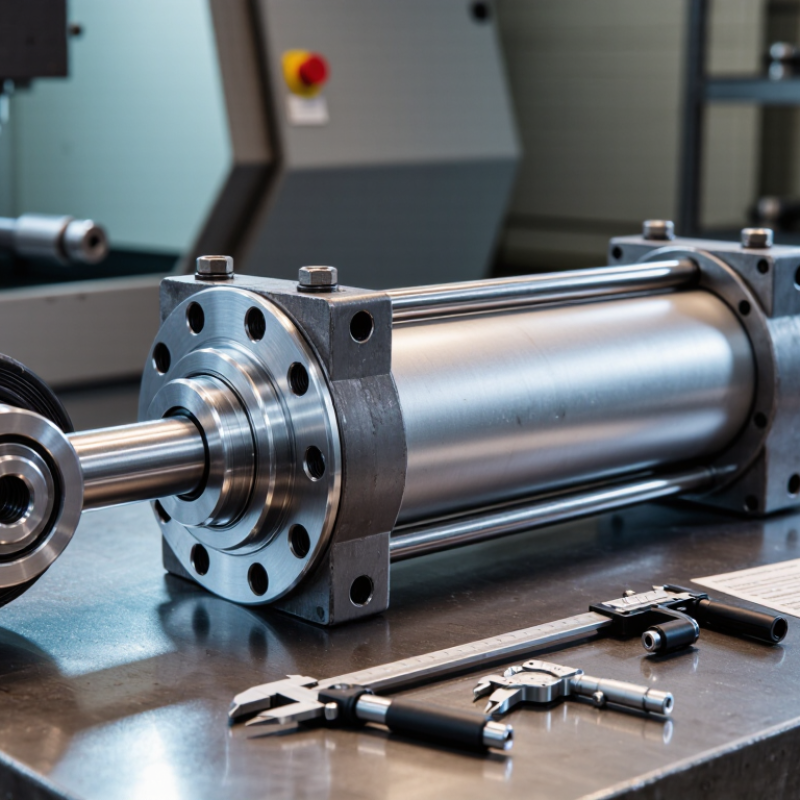
A wheel lift cylinder is a hydraulic actuator used on recovery and towing equipment. It raises, lowers, or adjusts the wheel-lift assembly beneath a vehicle. When hydraulic fluid enters one port, pressure moves the piston and rod. The rod then transfers force to the lifting arms.
Simple mechanism. Heavy responsibility.
A typical cylinder includes a steel barrel, piston, rod, seals, bushings, and hydraulic ports. Its performance depends on bore size, stroke length, working pressure, and mounting design. In practical use, the cylinder must lift smoothly without sudden movement. It also needs enough strength for repeated loading, vibration, and outdoor moisture.
A reliable manufacturer in China should provide dimensional inspection, pressure testing, surface protection, and material traceability. Clear drawings matter, especially when a cylinder replaces an older unit.
Field experience shows that many failures begin with small warning signs. A thin oil film around the rod may indicate worn seals. Uneven lifting can suggest contaminated fluid, misalignment, or internal wear. Sometimes, the cylinder is blamed too quickly. The hydraulic pump or control valve may be the real problem. I have found that checking the rod surface, pin alignment, fluid cleanliness, and hose condition together gives a more accurate diagnosis. Specifications alone are not enough. A well-finished cylinder can still fail if installation is careless or maintenance is delayed. Clearance, sealing quality, and testing records deserve close attention.
Key Features of a Reliable Wheel Lift Cylinder Manufacturer
Best Wheel Lift Cylinder Manufacturer in China?
A reliable wheel lift cylinder manufacturer should prove performance, not just display polished products. Look for controlled steel sourcing, complete material records, and precision-honed cylinder bores. These details affect sealing, lifting force, and service life. Ask whether every cylinder receives pressure testing before shipment. Dimensional reports should cover bore size, rod diameter, mounting points, and stroke length.
Manufacturing experience also matters. A capable supplier can explain seal selection for temperature, oil type, and operating pressure. It should provide practical samples, clear drawings, and traceable inspection records. Quality systems are useful, but real test data matters more. No factory is perfect. Some specifications may require adjustment after field testing, and honest engineers should admit this. Ask how failed samples are analyzed and corrected.
Tips: Request a sample cylinder and inspect its welds, rod finish, and port threads. Confirm cycle-test results under realistic loads, not only laboratory conditions. Check packaging details too; exposed rods can suffer damage during transport. Communication is another quiet quality signal. Slow replies, vague tolerances, or missing test records deserve attention. A dependable manufacturer supports technical questions after delivery and explains limitations without exaggeration.
Manufacturing Processes and Quality Control in China
Best Wheel Lift Cylinder Manufacturer in China?
A reliable wheel lift cylinder begins with controlled material preparation. Manufacturers usually inspect steel tubes, piston rods, seals, and weld fittings before production. Tube honing creates a smooth bore for stable seal movement. Rod grinding and surface treatment reduce friction and early wear. Welding quality matters because small pores can become serious leaks.
Small details matter.
During assembly, trained technicians check seal direction, piston alignment, and torque values. Clean workstations prevent metal dust from damaging internal components. Each cylinder should receive dimensional checks, visual inspection, and pressure testing. A practical test may include holding hydraulic pressure while inspectors monitor leakage and rod movement. Records should link every unit to materials, operators, and test results.
Production is never completely flawless. A mature factory can still miss a label or overlook a minor scratch. This is why independent sampling, process audits, and corrective-action reports are useful. Buyers should review test procedures rather than trust polished photographs. Ask for inspection data, load-cycle results, seal specifications, and packaging details. I also recommend visiting the factory or arranging a live video audit. Real manufacturing evidence is often less impressive, but more trustworthy.
How to Evaluate Wheel Lift Cylinder Performance and Durability
Best Wheel Lift Cylinder Manufacturer in China?
Evaluating a wheel lift cylinder requires more than checking its rated force. Measure lifting speed, holding stability, leakage, rod deflection, and recovery after repeated cycles. ISO 10100:2020 provides a useful framework for hydraulic cylinder testing, including leakage and pressure performance. A reliable sample should hold its rated load without visible drift during a controlled test. Record oil temperature, pressure, cycle count, and load position. Small differences matter.
Durability depends on seals, surface treatment, weld quality, and contamination control. The National Fluid Power Association’s 2024 industry statistics show continued pressure on fluid-power shipments, making maintenance and service life important purchasing factors. Industry guidance commonly links hydraulic contamination with faster wear and unstable valve performance. In practical tests, use filtered oil and inspect the rod after every 10,000 cycles. Look for scoring, rust, seal swelling, or slow retraction. A polished rod is not proof of long life. I have seen attractive samples fail early because their wiper seals were poorly fitted.
Tips: Request an endurance report with real test conditions. Confirm the pressure rating, safety factor, and replacement-seal availability. Compare at least three samples. Ask whether testing used clean oil or ordinary workshop conditions. That detail can change the result. Also, do not trust a single pressure test. A cylinder may survive peak pressure yet perform poorly after heat, vibration, and side loading. Evaluation is never perfectly neat. Unmeasured factors still deserve attention.
How to Choose the Best Chinese Wheel Lift Cylinder Manufacturer
How to Choose the Best Chinese Wheel Lift Cylinder Manufacturer
According to Grand View Research’s 2024 hydraulic cylinders market report, the global market was valued at approximately USD 15 billion in 2023. The report also expects steady growth through 2030. This growth increases supplier choices, but not necessarily supplier quality. Start with the cylinder’s actual duty. Confirm bore diameter, rod diameter, stroke length, operating pressure, side-load exposure, and retraction speed. A manufacturer should provide pressure-test records, material certificates, dimensional drawings, and seal specifications.
Experience matters in wheel-lift applications. Ask whether the factory has tested cylinders under repeated lifting, vibration, contamination, and uneven loading. Request sample inspection data, not only catalog ratings. ISO 4413 provides widely recognized safety guidance for hydraulic systems, while ISO 9001 certification can support process consistency. However, certification alone proves little about a specific cylinder. Inspect traceability from steel batch to final test.
A practical audit should examine machining tolerance, chrome thickness, welding control, assembly cleanliness, and leak testing. The supplier should explain its corrective-action process when a sample fails. Small details matter. For example, poor rod protection can damage seals after road debris strikes the cylinder. Freight planning also deserves attention; spare seals and replaceable wear rings reduce downtime. A perfect supplier does not exist. I would still require an independent pre-shipment inspection, because trusting paperwork too quickly remains an expensive mistake.
How to Choose the Best Chinese Wheel Lift Cylinder Manufacturer
This 100-point procurement model prioritizes the factors that most directly affect wheel lift cylinder reliability, safety, total cost, and delivery performance. The percentages represent a practical buyer-defined evaluation framework rather than data from any individual company.
When comparing manufacturers, verify pressure and load specifications, sealing performance, material traceability, quality-control records, customization capability, and after-sales support before placing an order.
 +86-13349293098
 Contact WhatsApp
 Contact Email