+86-13349293098


A Slewing Circle Bearing may look like a simple steel ring, but it carries substantial loads while allowing large structures to rotate. Buyers encounter these components in wind turbines, cranes, excavators, and industrial platforms. Demand for reliable rotating equipment is growing. The International Energy Agency’s Renewables 2023 report estimated that renewable power capacity additions reached nearly 510 gigawatts in 2023. The Global Wind Energy Council’s Global Wind Report 2024 recorded 117 gigawatts of new wind capacity that year. These figures do not measure bearing demand directly, but they show the scale of equipment entering service.
Supplier selection takes more than comparing prices. Buyers should check load ratings, raceway hardness, gear accuracy, sealing, material traceability, and documented testing. Ask how a supplier verifies dimensions and handles corrosion protection. A mill certificate is useful. So is a clear inspection record. For global orders, confirm packaging, delivery schedules, spare-part support, and communication across time zones. Small details matter.
This guide examines suppliers through practical criteria, not promotional claims alone. It considers manufacturing capability, quality controls, customization, and after-sales service. A polished catalog is not proof of consistent production. Nor does one test report answer every question. Buyers should request evidence relevant to their operating conditions, including load cycles, temperature, and exposure to dust or moisture. Supplier comparisons can still be imperfect; public information is often uneven. That is worth acknowledging. Careful verification helps global buyers choose a bearing that fits the machine, the duty, and the maintenance plan.
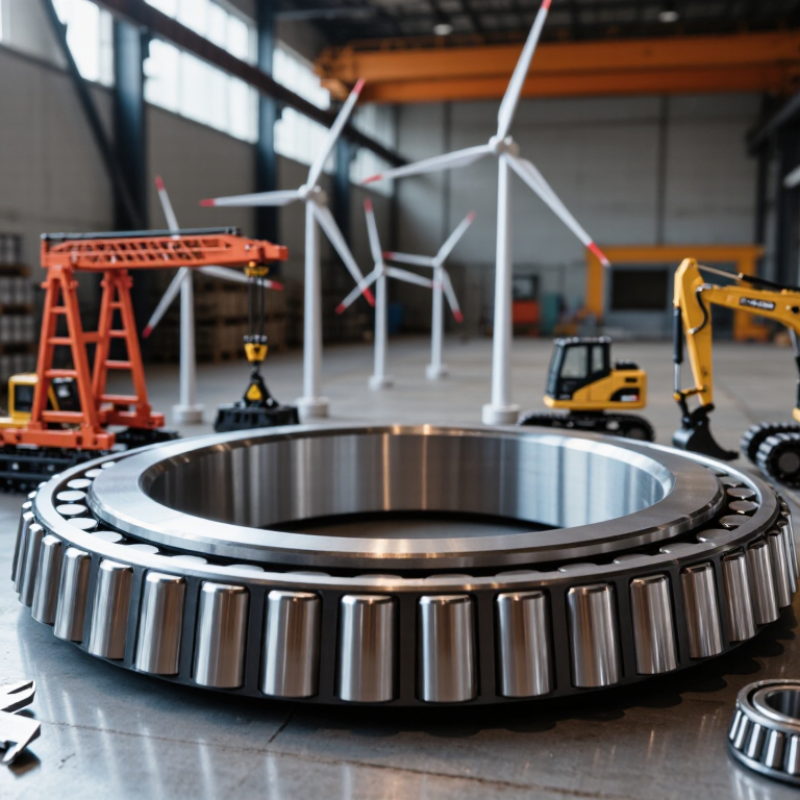
A slewing circle bearing is a large-diameter bearing that supports rotation between a machine’s fixed and moving sections. It can carry axial loads, radial loads, and tilting moments at the same time.
Many designs use hardened raceways, rolling elements, seals, and sometimes integrated gear teeth. The bearing may look simple from outside.
Its mounting surfaces are not forgiving. Poor flatness or uneven bolt tightening can cause rough rotation and shorten service life.
These bearings appear in excavators, mobile cranes, wind turbines, and material-handling equipment. On an excavator, the bearing lets the upper structure turn while resisting loads from the boom and bucket. A crane’s bearing must also cope with changing loads as the boom moves.
That matters.
Selection depends on load, rotation speed, duty cycle, available space, and exposure to dust or moisture. Buyers should share accurate load data and mounting drawings with suppliers, then check lubrication guidance, sealing details, and inspection requirements. In practice, the right choice is not always the largest bearing. A smaller design may suit the duty, but assumptions about load direction deserve a second look.
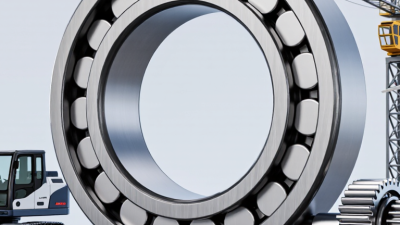
Global buyers should compare slewing ring bearing suppliers against the machine’s actual duty cycle, not just its drawing. Ask for static and dynamic load ratings, overturning moment limits, allowable tilting, and design assumptions. ISO 281 sets methods for rating bearing life; ISO 76 covers static load ratings. Request calculations tied to your load spectrum, rather than a single headline capacity. Small details matter: raceway hardness records, runout measurements, bolt-hole tolerances, seal design, and grease paths should be documented.
Capacity and delivery resilience deserve equal scrutiny. The Global Wind Energy Council’s Global Wind Report 2024 records 117 GW of new wind capacity installed in 2023, illustrating demand for large, reliable rotating components. The International Energy Agency’s Renewables 2023 report projected roughly 2,400 GW of renewable capacity additions during 2022–2027. These figures do not prove any supplier can meet your needs. They do make production capacity, material traceability, and realistic lead-time commitments worth checking. Request inspection plans, sample test reports, and clear procedures for handling nonconforming parts.
A low quote can still be costly. Compare warranty terms, service response, and spare-part availability alongside unit price. Ask how the supplier controls heat treatment and dimensional variation across batches. Review the evidence, not only the presentation. One trade-off is easy to miss: a highly customized bearing may fit perfectly but take longer to replace. No checklist is perfect. The best evaluation links every supplier claim to a measurable requirement.
China is a major sourcing region for slewing circle bearings, supported by a broad steel and heavy-equipment manufacturing base. The World Steel Association’s World Steel in Figures 2024 reports that China produced 1,019.1 million tonnes of crude steel in 2023. GWEC’s Global Wind Report 2024 records 75.9 GW of new wind capacity there that year, creating demand for large, load-bearing components. Scale helps. But output volume alone cannot prove bearing quality; buyers should check load-test records and machining tolerances.
Europe offers a different strength: close links between engineering, wind power, and industrial supply chains. WindEurope reported 18.3 GW of new wind installations across Europe in 2023. This supports demand for bearings designed for heavy loads and long service intervals. German and other European suppliers often compete through application engineering and documentation, although lead times and costs can vary. A polished catalogue is not enough.
North American buyers may value local technical support, repair access, and predictable delivery, especially for mining, construction, and energy equipment. GWEC reported 6.4 GW of new US wind capacity in 2023. When comparing regions, ask for material traceability, fatigue-test methods, and realistic delivery dates. Small omissions matter. Reports describe market activity, not individual factory performance; an on-site audit remains useful.
Top slewing circle bearing suppliers should be compared by design fit, not catalogue size alone. A single-row four-point-contact bearing can suit moderate combined loads and compact assemblies. Crossed-roller designs often offer greater stiffness where tilting accuracy matters. Triple-row roller bearings can carry heavy loads, but may need more space and careful mounting. Check the load directions, overturning moment, rotation speed, and operating cycle against the machine’s actual duty.
Tips: Ask for load calculations, material traceability, and inspection records. Compare raceway hardness, gear accuracy, runout, and dimensional tolerances. ISO 9001 certification describes a quality-management system; it does not, by itself, prove that a specific bearing meets your requirements. Ask for evidence.
Support matters after selection. A useful supplier can review mounting-surface flatness, bolt patterns, lubrication intervals, and installation procedures. Confirm how technical questions, replacement parts, and delivery changes are handled. Small details matter. A polished datasheet may still leave gaps, so request drawings and test documentation for the exact configuration. Some comparisons remain imperfect when operating conditions are not fully known; record assumptions and revisit them before ordering.
Use this design-based comparison and supplier checklist to guide sourcing. Bearing suitability depends on the application loads, operating conditions, mounting structure, and manufacturer calculations; the table is not a supplier ranking.
| Comparison Factor | Single-Row Four-Point-Contact Ball | Crossed-Roller | Three-Row Roller | What Buyers Should Verify with a Supplier |
|---|---|---|---|---|
| Rolling-element arrangement | One row of balls, commonly arranged for four-point contact in the raceways. | One row of cylindrical rollers arranged alternately at right angles to one another. | Three roller rows, generally arranged to carry axial, radial, and overturning loads through separate roller sets. | Request a sectional drawing and confirm the stated arrangement matches the offered part number and load case. |
| Typical design strengths | Compact construction and a comparatively simple design for combined loading in applications suited to its capacity. | High rigidity and accurate rotation can be useful where controlled runout and stiffness are important. | Separate roller paths can provide high load capacity for heavy-duty applications, subject to the bearing’s dimensions and design. | Ask for application-specific axial, radial, and overturning-moment calculations rather than relying on a design type alone. |
| Common application contexts | Light- to medium-duty turntables, compact cranes, and machinery, depending on the load and duty cycle. | Precision turntables, industrial positioning equipment, and machinery requiring high rotational stiffness. | Heavy cranes, excavators, and other equipment where substantial combined loads may occur. | Provide the actual duty cycle, load spectrum, speed, temperature range, and operating environment for review. |
| Load and life assessment | Capacity and service life depend on load direction, load distribution, mounting stiffness, lubrication, and operating conditions. | Rigidity and running accuracy depend on the bearing design, preload or clearance, fit, and mounting arrangement. | Load capacity depends on roller geometry, raceway design, internal load distribution, and mounting conditions. | Request documented assumptions, safety factors, static checks, and life or fatigue calculations relevant to the specific application. |
| Gearing and configuration | Slewing bearings may be supplied with internal, external, or no gear teeth. Seals, mounting holes, lubrication features, and materials vary by design and application. | Confirm gear geometry, tooth data, mounting interfaces, sealing arrangement, lubrication points, and any required accessories on the approved drawing. | ||
| Quality management | ISO 9001 specifies requirements for a quality management system; certification alone does not establish the performance of a particular bearing. | Check the certificate’s validity and scope, and review production controls, inspection plans, traceability, and handling of nonconforming products. | ||
| Material and inspection records | EN 10204 defines types of inspection documents for metallic products. A Type 3.1 inspection certificate includes specific inspection results validated by the manufacturer’s authorized representative independent of the manufacturing department. | Specify required material and inspection documents in the purchase order; confirm heat or batch traceability and the records supplied with the bearing. | ||
| Non-destructive testing | Non-destructive testing methods may be used where required by the design, specification, or customer acceptance plan; the method and inspection coverage should be defined. | State the required method, inspected locations, acceptance criteria, and reporting format. Where personnel certification is required, ISO 9712 addresses qualification and certification of NDT personnel. | ||
| Engineering and after-sales support | Support can include load review, interface drawings, installation guidance, lubrication recommendations, and troubleshooting; the scope varies by supplier. | Agree on drawing approval, response times, installation documentation, spare-part availability, warranty terms, and technical support contacts before ordering. | ||
| Incoming inspection and installation | Incorrect handling, contamination, uneven support surfaces, or improper bolt tightening can affect bearing operation and service life. | Request written instructions for storage, lifting, mounting-surface checks, bolt tightening sequence, gear backlash checks where applicable, and initial lubrication. | ||
Standards references describe the scope of the cited documents; they do not certify a bearing or guarantee application performance. Confirm the applicable standard editions, inspection requirements, and acceptance criteria directly in the technical specification and purchase order.
Top Slewing Circle Bearing Suppliers for Global Buyers
Selecting a slewing ring bearing supplier takes more than comparing prices. Start with the operating conditions: axial and radial loads, overturning moment, rotation speed, and exposure to dust or moisture. Share the actual machine duty cycle, not just a maximum load figure. Small details matter.
Ask for a dimensioned drawing and check the mounting-hole pattern, gear data, and bearing dimensions against your design. Request material traceability, heat-treatment records, and inspection results for runout and gear backlash. A polished certificate is useful, but it does not prove that the delivered part matches the drawing. Confirm how each production batch is identified and inspected.
Verify production capacity, packaging, lead times, and after-sales support with specific questions. For example, ask how the supplier protects machined surfaces during ocean transport and reports a dimensional deviation. Speak with relevant customers when possible, and consider a sample inspection or factory audit for critical applications. No checklist removes every risk. I would still allow time for clarifications; drawings can be incomplete, and buyers sometimes overlook service access or bolt replacement space. A dependable supplier should explain limits clearly, rather than promise a perfect fit before reviewing the application.
How Global Buyers Can Verify and Select a Supplier
This illustrative scorecard shows five practical areas to verify when evaluating a slewing bearing supplier. Scores are an example assessment, not market research or ratings of actual companies. Confirm claims with traceable records, relevant test reports, and direct audits.