Leave Your Message

Top Hydraulic Lift Cylinder Types for Global Buyers

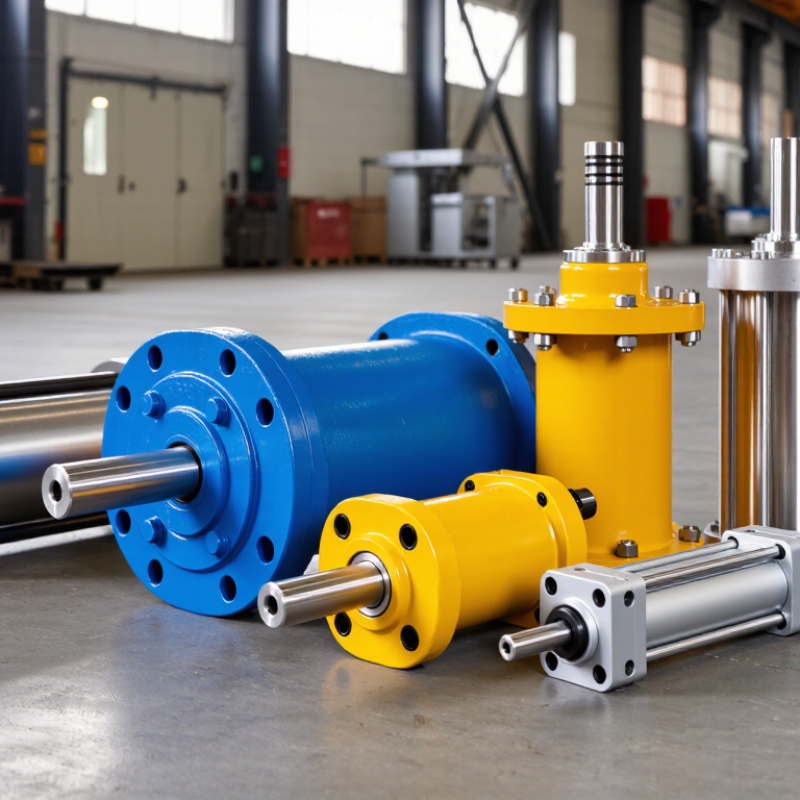
Choosing the right Hydraulic Lift Cylinder is rarely a simple catalog decision. Global buyers must match cylinder design with load direction, stroke length, working pressure, mounting space, duty cycle, and operating environment. A compact warehouse stacker may need a single-acting cylinder. A mobile crane often requires a double-acting or telescopic design. Agricultural equipment may demand welded construction, protected seals, and reliable performance under dust, vibration, and changing temperatures.

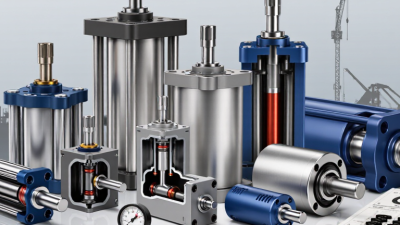
Hydraulic engineering author Herbert E. Merritt offered a useful principle: “A hydraulic system is only as reliable as its weakest component.” That warning applies directly to cylinder sourcing. A strong barrel cannot compensate for poor seals. Accurate machining cannot fix an unsuitable mounting arrangement. Buyers should examine tie-rod, welded, mill-duty, telescopic, and custom Hydraulic Lift Cylinder types with equal attention to service conditions and supplier capability. Documentation matters. So do test records, material traceability, seal compatibility, and after-sales support.

There is no universal best cylinder.

This guide compares leading cylinder types for international purchasing teams. It focuses on practical selection rather than impressive specifications alone. Real installations are often less perfect than technical drawings suggest. Loads may shift. Oil may become contaminated. Maintenance may be delayed. These details can change the final choice. Readers should also question supplier claims, verify pressure ratings, and confirm applicable standards before ordering. A careful decision may cost slightly more at the beginning, but it can reduce leakage, downtime, replacement work, and unexpected installation changes across global operations.
Top Hydraulic Lift Cylinder Types for Global Buyers

Hydraulic Lift Cylinder Classification: Single- and Double-Acting Designs

Top Hydraulic Lift Cylinder Types for Global Buyers

Single-acting and double-acting cylinders serve different lifting conditions. A single-acting cylinder uses hydraulic pressure for one direction, then gravity or a spring returns the rod. It suits dump platforms, compact lifts, and applications with a reliable downward load. Its simpler circuit can reduce installation points and maintenance demands. However, return speed may vary when the load changes.

A double-acting cylinder controls both extension and retraction through hydraulic pressure. This design supports controlled lowering, positioning, and repeated cycling. It is often preferred for scissor lifts, material platforms, and equipment exposed to uneven loading. According to MarketsandMarkets’ Hydraulic Equipment Market report, the global market is projected to grow from about 50 billion dollars in 2024, reflecting steady demand across construction and industrial machinery.

Selection requires more than comparing rated force. Confirm stroke length, working pressure, mounting geometry, rod diameter, and side-load exposure. ISO 6020/2 and ISO 6022 provide useful dimensional and performance references for metric hydraulic cylinders. Field maintenance records often show premature seal wear caused by misalignment, not pressure alone. That detail is easy to miss.

Single-acting designs can be efficient, but they depend heavily on gravity and load behavior. Double-acting cylinders offer greater control, yet they need more valves, hoses, and safeguards. This classification is practical, not complete. Temperature, contamination, duty cycle, and emergency lowering requirements may change the correct choice. A careful load test should follow every design calculation.
Telescopic Lift Cylinders: Two to Five Stages for Vertical Applications

Top Hydraulic Lift Cylinder Types for Global Buyers

Telescopic lift cylinders suit vertical applications where long extension meets limited installation space. They use nested stages, commonly from two to five sections. Each stage extends in sequence, creating a tall lifting stroke from a compact retracted length. Two-stage cylinders often provide a practical balance between capacity and stability. Three to five stages offer greater reach, but require stricter guidance and accurate alignment.

For global buyers, check the fully retracted length, maximum stroke, rated load, and mounting position. A vertical cylinder should not carry uncontrolled side loads. Guide rails or a separate support structure may be necessary. Port size, operating pressure, oil cleanliness, and sealing materials also affect service life. In field inspections, uneven extension often points to poor alignment, trapped air, or stage contamination. A small design error can become expensive.

Tips: Confirm the load at every extension stage, not only at full retraction. Leave room for inspection around each nested section. Protect exposed surfaces from dust, water, and impact. Ask for load charts, test records, and dimensional drawings before approval. Some projects specify five stages too quickly. Fewer stages may deliver better stability and easier maintenance. Check this assumption carefully.

Top Hydraulic Lift Cylinder Types for Global Buyers

Telescopic lift cylinders with two to five stages provide progressively greater vertical extension from a compact retracted length.

The chart uses a nominal extension index based on stage count: a two-stage cylinder is represented as 2×, while a five-stage cylinder is represented as 5× relative to one cylinder section. Actual stroke length and lifting capacity depend on stage overlap, bore and rod diameters, operating pressure, side-load conditions, mounting design, and required stability.

Tie-Rod and Welded Cylinders: Comparing 210-Bar and 350-Bar Ratings

For global buyers, hydraulic lift cylinder selection starts with pressure, not catalog appearance. A 210-bar tie-rod cylinder suits many warehouse lifts, platforms, and moderate-duty handling systems. Its bolted construction supports easier seal replacement with ordinary workshop tools. However, exposed tie rods can collect dust, moisture, and spilled hydraulic oil. That detail matters in ports, farms, and outdoor yards.

A welded cylinder is often preferred when compact dimensions and higher structural stiffness matter. At 350 bar, it can deliver strong lifting force from a smaller bore. The pump, hoses, valves, and mounting points must share that pressure rating. Pressure is not capacity by itself. Bore diameter, stroke length, side loading, buckling risk, and duty cycle still control performance. A 350-bar rating also demands cleaner oil and disciplined inspection. Tiny rod damage can shorten seal life quickly.

During procurement, request pressure-test records, material details, seal temperature ranges, and corrosion protection data. Confirm whether the stated pressure means working pressure or test pressure. These terms are sometimes confused. Specifications can look impressive yet ignore rod alignment. That remains a common weakness. A practical trial should measure drift, cycle time, oil temperature, and leakage under the actual load. Leave a margin below maximum pressure, especially when loads create shock.

Top Hydraulic Lift Cylinder Types for Global Buyers - Tie-Rod and Welded Cylinders: Comparing 210-Bar and 350-Bar Ratings

Comparison Dimension Tie-Rod Cylinder Welded Cylinder 210-Bar Configuration 350-Bar Configuration Buyer-Relevant Consideration
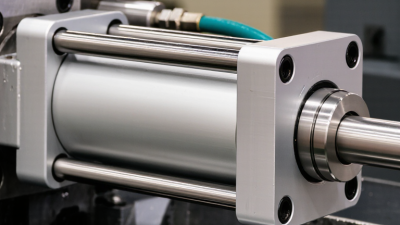
Cylinder construction Head and cap are clamped to the honed barrel with external tie rods and nuts. Head, cap and barrel are welded into a compact pressure vessel. Commonly available in standard industrial and mobile lifting designs. Normally requires a purpose-designed high-pressure welded or specially engineered construction. Tie-rod designs are convenient for standardized industrial replacement; welded designs are generally preferred where compactness and high pressure are important.
Typical pressure class 210 bar working pressure 210 bar working pressure Approximately 21 MPa; suitable for many general hydraulic lifting systems. Approximately 35 MPa; requires compatible seals, ports, tubing, valves and pump components. Working pressure is not the same as proof or burst pressure. The complete hydraulic circuit must be rated for the selected pressure.
Common application area Factory presses, machine tools, material-handling equipment and general industrial lifts. Mobile equipment, compact lifting mechanisms, agricultural machinery, cranes and construction equipment. Best suited to normal lifting duty where installation space is adequate. Best suited to demanding mobile or industrial duty requiring higher force from a smaller bore. Application, duty cycle, shock loading and available installation space should be evaluated together.
Force potential Cylinder force is determined by pressure multiplied by effective piston area; extension force is higher than retraction force because the rod occupies part of the annular area. At the same bore and on the extension stroke, theoretical force is about 1.67 times the force at 350 bar. At the same bore and on the extension stroke, theoretical force is about 1.67 times the force at 210 bar. For example, a 100 mm bore produces approximately 165 kN at 210 bar and 275 kN at 350 bar, before efficiency and mechanical losses.
Packaging and envelope External tie rods and end hardware increase the overall envelope. Typically shorter and cleaner externally, with fewer protruding components. Often selected when a larger bore is acceptable for the required load. Higher pressure can reduce the required bore, helping save installation space and component weight. Check closed length, stroke, port position, mounting dimensions and minimum clearance before ordering.
Serviceability Usually easier to disassemble and reseal with standard maintenance tools. Often requires removal from the machine and specialist tools or procedures for seal replacement. Well suited to facilities with routine cylinder maintenance capability. Maintenance should follow the manufacturer’s torque, cleanliness and pressure-test requirements. Choose tie-rod construction where field refurbishment and spare-part availability are major priorities.
Resistance to external contamination More exposed tie rods can collect dirt, corrosion products and impact damage. Smooth welded exteriors generally provide fewer external snag points. Suitable for protected indoor installations when rod and tie-rod areas are kept clean. Recommended with robust rod wipers and suitable corrosion protection for harsh mobile environments. External protection does not replace correct filtration, rod alignment or regular inspection.
Pressure and fatigue design Threaded tie rods, nuts and end-cap joints must be correctly preloaded and sized. Weld quality, stress concentration, barrel wall thickness and heat-affected zones require careful design control. Suitable for moderate pressure and properly controlled cyclic duty. Requires detailed fatigue assessment where pressure cycling, load reversal or hydraulic shock is present. Static pressure alone is insufficient for selection; calculate the duty cycle and account for peak transient pressure.
Rod and barrel requirements Commonly uses a hard-chrome-plated rod and honed steel barrel. Commonly uses a hard-chrome-plated or corrosion-resistant rod with a honed or engineered barrel. Material and wall thickness depend on bore, stroke, mounting and design standard. Rod buckling, barrel stress and gland loading become more critical as pressure and stroke increase. Long-stroke compression applications should include a rod-buckling check, especially for push loads.
Port and connection selection Ports are often available in common metric, BSPP, SAE or other regional configurations. Ports may be integrated or machined into welded end components. Port size must support the required flow without excessive pressure loss. All ports, adapters, hoses and valves must have a verified rating at or above the system pressure. Specify thread standard, port orientation and hose-bend clearance to avoid installation problems.
Seal selection Seal kits are often easier to source because many dimensions are standardized. Seal design is more application-specific, particularly for compact high-pressure glands. Seal material must suit the hydraulic fluid, temperature and operating speed. Use seals specifically rated for the pressure, extrusion gap, temperature and fluid type. Do not select seals by pressure alone; contamination, speed, temperature and side loading also affect service life.
Mounting alignment Rigid and pivoting mounts are available, but side loading should be minimized. Frequently designed with spherical or pivot mounts for mobile equipment movement. Alignment remains essential even at moderate pressure. Misalignment can cause rapid rod, gland and seal damage under high pressure. Use guides or external load-support structures when the cylinder is not intended to carry side loads.
Best selection priority Standard dimensions, maintainability, predictable replacement and moderate purchase cost. Compact envelope, high strength-to-weight ratio, impact resistance and mobile-equipment integration. General-purpose lifting, moderate force and widely available hydraulic components. High force density, compact design and demanding duty—provided the whole system is engineered for 350 bar. Compare lifecycle cost, downtime risk, service access and safety margin rather than initial cylinder price alone.

Engineering note: The values shown are typical design-reference figures, not universal ratings. Final selection should be based on the cylinder drawing, applicable design standard, verified working and proof pressures, load case, stroke, speed, mounting arrangement, hydraulic fluid, temperature and required safety factor.

ISO 6020/2 and ISO 6022 Standards for Global Cylinder Buyers

Top Hydraulic Lift Cylinder Types for Global Buyers

ISO 6020/2 and ISO 6022 dimensions matter when hydraulic lift cylinders cross borders. ISO 6020/2 covers compact cylinders rated up to 160 bar. ISO 6022 addresses heavier designs rated up to 250 bar. These limits are practical checkpoints, not marketing decoration. A 160-bar cylinder may suit a warehouse lift, while a quarry platform may require the stronger ISO 6022 configuration. Mounting holes, rod diameter, stroke length, and port positions must match the machine drawing. Small errors can stop installation.

According to Grand View Research’s 2024 hydraulic cylinders report, the global market reached approximately USD 14.8 billion in 2023. The report also projects continued growth through 2030, driven by construction, agriculture, and material handling. That expansion increases demand for interchangeable components and documented testing. Buyers should request pressure-test records, material certificates, seal specifications, and dimensional inspection data. Look closely at cold-start performance. It is often ignored.

ISO compliance does not automatically prove total product quality. A cylinder can follow the right dimensions yet suffer from poor surface finishing or unstable sealing. Experience shows that rod coating, guide clearance, and contamination control strongly affect service life. Ask for fatigue-cycle evidence when loads reverse frequently. Also verify whether rated pressure means working pressure or test pressure. The wording can mislead. Global buyers should compare the full technical file, not only the standard number.

Cylinder Selection by Bore, Stroke, Load Capacity, and Duty Cycle

Top Hydraulic Lift Cylinder Types for Global Buyers

Cylinder Selection by Bore, Stroke, Load Capacity, and Duty Cycle

Cylinder selection should begin with load, pressure, and mounting geometry. A 80 kN load at 16 MPa requires about a 80 mm bore before losses and safety margins. The working formula is force equals pressure multiplied by piston area. Dynamic impact, friction, and uneven loading can increase the required bore. ISO 4413 supports risk-based hydraulic design, while ISO 6020/2 defines key dimensions for medium-duty cylinders. Grand View Research’s 2024 hydraulic cylinders report forecasts global market growth of about 4.8% annually through 2030, reflecting demand across construction and material-handling equipment.

Stroke needs more than a travel measurement. Add clearance for cushions, mechanical stops, and alignment changes. Long strokes may require a larger rod to resist buckling, especially with horizontal loads. Side loading is often underestimated. It can damage seals and shorten guide life.

Duty cycle changes the specification. Record cycles per hour, extension speed, dwell time, and operating temperature. A cylinder moving every few seconds needs better heat control than one operating occasionally. Seal selection must match fluid type, contamination, and temperature. ISO 4413 emphasizes controlling leakage, pressure, and stored energy during operation and maintenance.

A practical check is useful. Measure the actual load.

I would not select the smallest cylinder that meets a static calculation. Real equipment vibrates, misaligns, and sometimes operates beyond its expected schedule. That uncomfortable detail deserves engineering attention.